Development Of An Integrated & Inclusive Approach To Effective Waste Management In Da Nang Through Business And Community Engagement
Vietnam is currently one of the world’s top five ocean plastic polluters, driven by a “linear economy” model and inefficient waste management where up to 60% of rural waste remains uncollected. This environmental crisis severely threatens marine ecosystems, coral reefs, and the livelihoods of communities dependent on fisheries and tourism. In response, the Vietnamese government has transitioned toward a “circular economy” through the 2020 Law on Environmental Protection, introducing policies like “pay-as-you-throw” and Extended Producer Responsibility (EPR).
To capitalize on this policy momentum, this technical assistance initiative identifies Da Nang – a major tourism hub aiming to become an “Environmental City” by 2030 – as a strategic pilot site. By implementing an integrated and inclusive solid waste management model focused on business engagement and plastic alternatives within the tourism sector, the TA seeks to develop a scalable solution that aligns with Vietnam’s national sustainability targets and the United Nations Sustainable Development Goals (SDGs).
Achievements
school plastic waste models piloted.
tons of plastic waste were collected over six months from five schools.
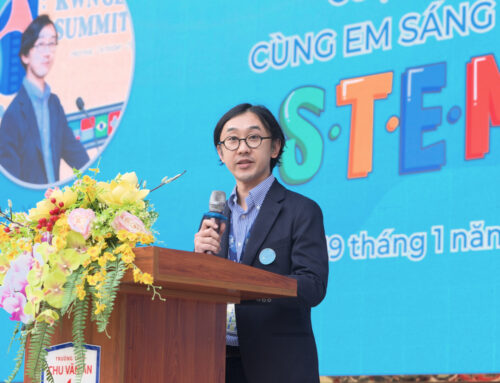
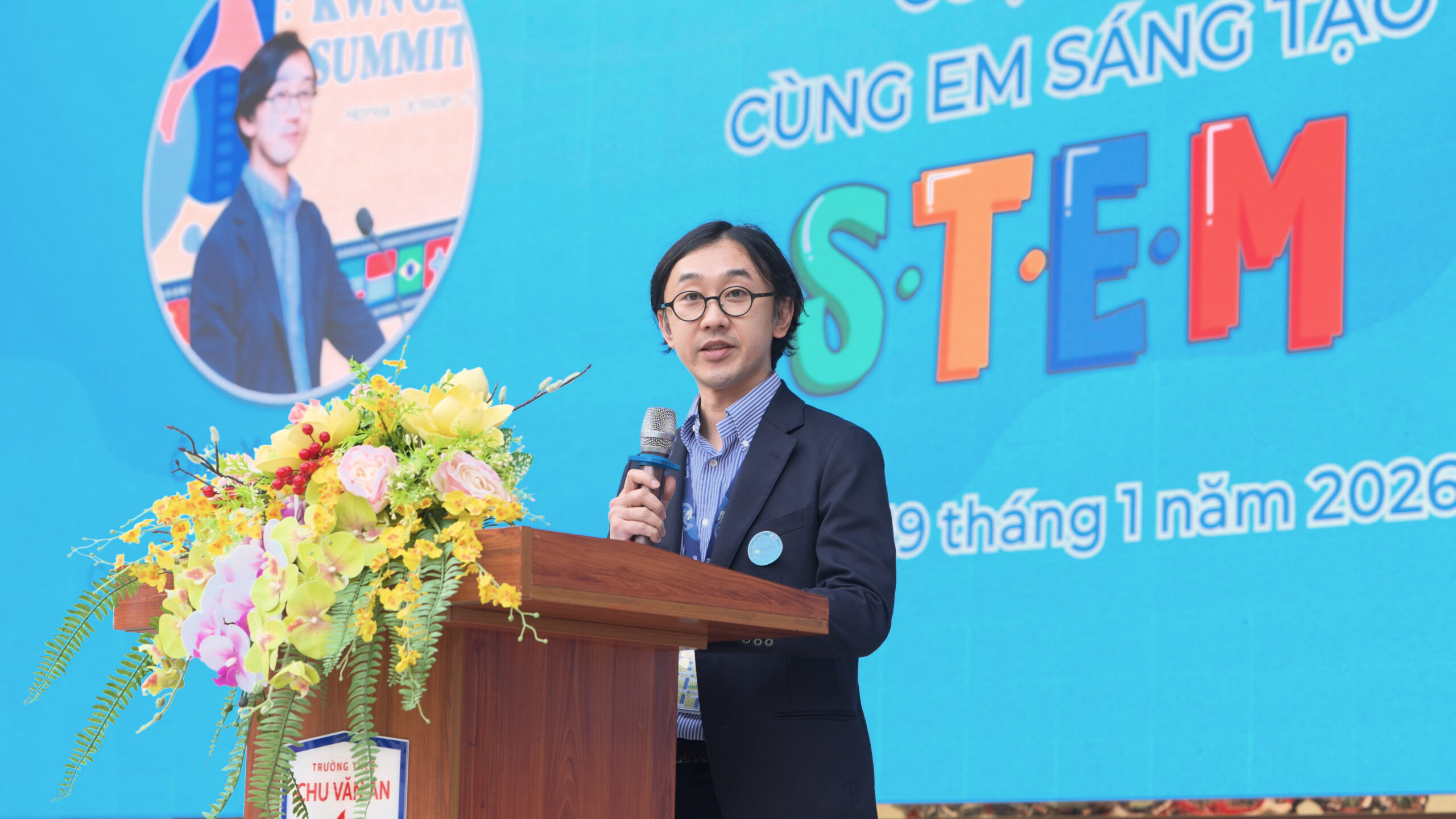
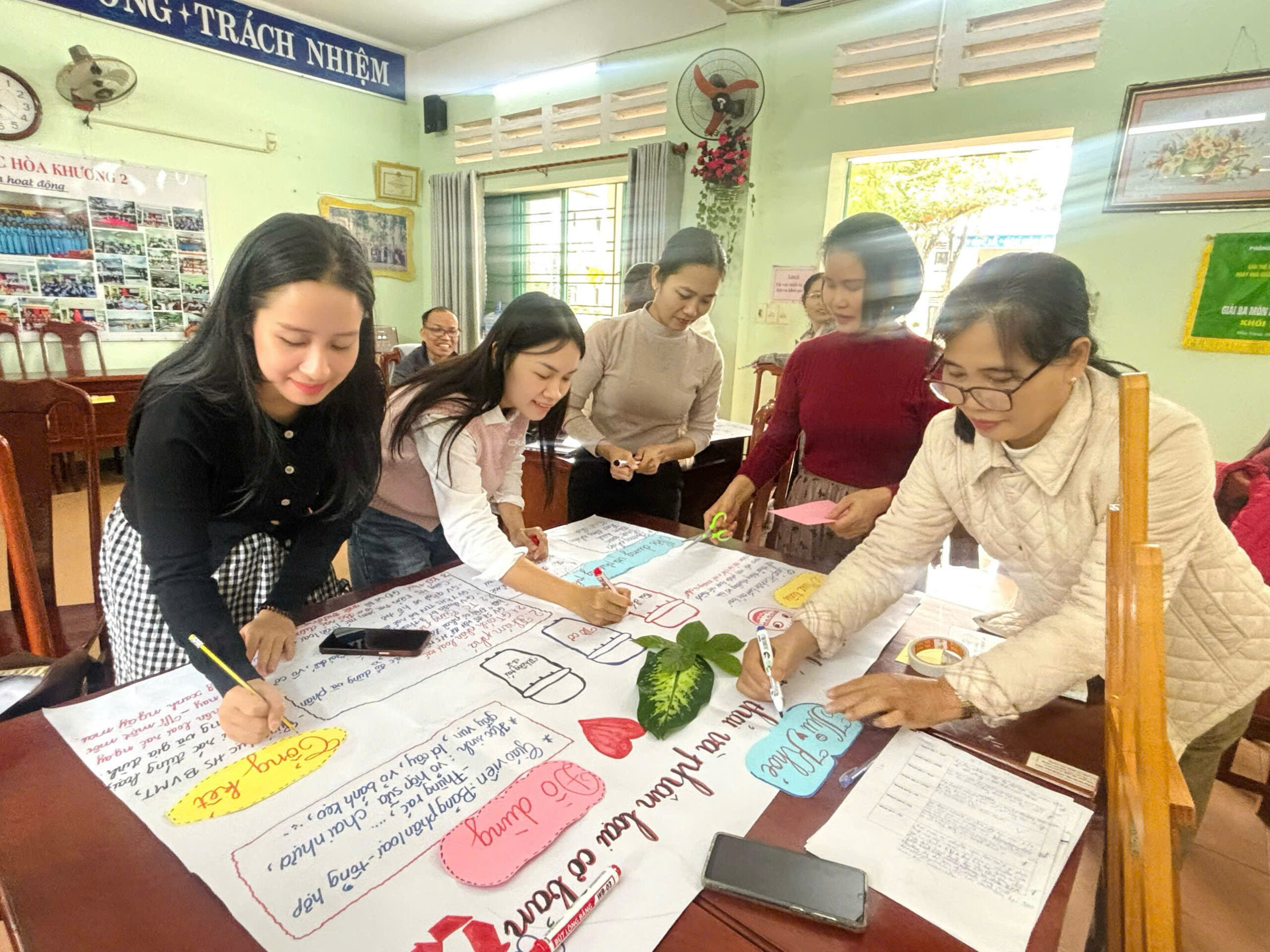
teachers from five schools were trained in STEM and active teaching.
business waste audits and circular models implemented.
of materials from a company were recycled into new materials over five months.
of organic waste from a company was composted over three months.
open waste-burning hotspots in Da Nang mapped.
Outcome 1. Development of an integrated and inclusive approach to effective waste management at provincial level through policy and community engagement, ensuring pollution reduction and human health benefits.
This initiative aims to address solid waste management challenges in Da Nang by fostering multi-stakeholder collaboration and delivering data-driven solutions. By mapping key actors and assessing local needs, the initiative establishes a scalable foundation for long-term environmental sustainability in Vietnam.
In partnership with the Vietnam Chamber of Commerce and Industry (VCCI), we engage a diverse range of stakeholders—including government agencies, private waste and tourism firms, NGOs, academia, and informal waste workers—to ensure inclusive and effective decision-making.
Key Outputs & Timeline
Output 1.1. Identification of waste burning hotspots and pollution impacts in Da Nang (June 2025 – August 2025)
This initiative identifies and analyzes open waste burning locations across both urban and rural areas using a combination of ground monitoring and satellite data. It assesses pollution impacts on different socioeconomic groups and generates practical recommendations to support evidence based policy and local action.
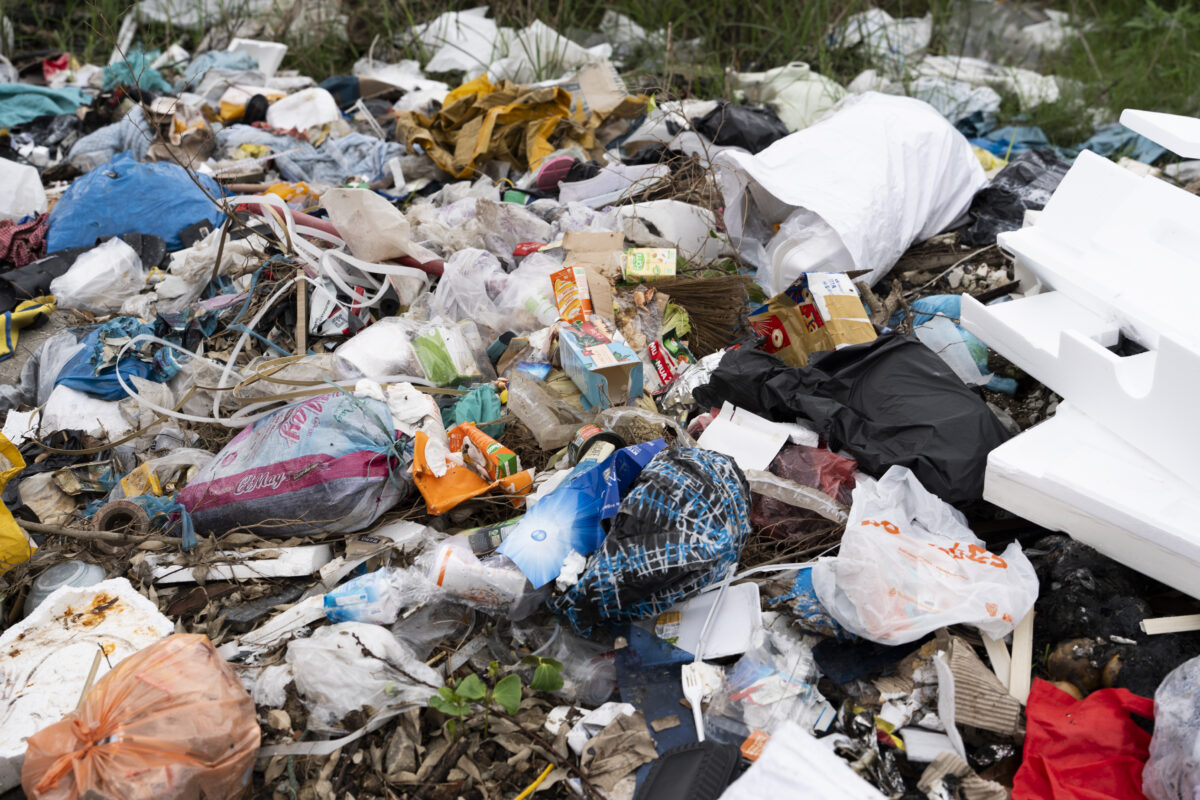
An open burning site
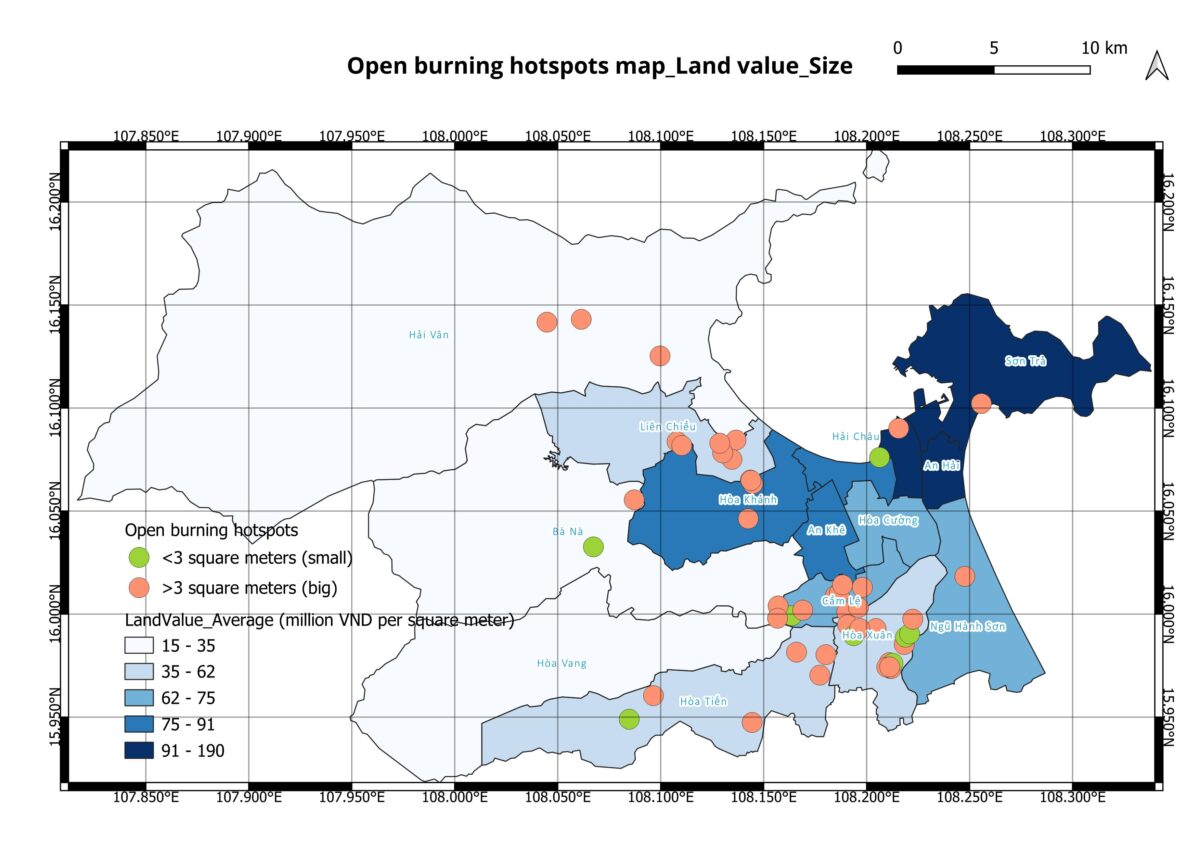
An open burning hotspots map by land value
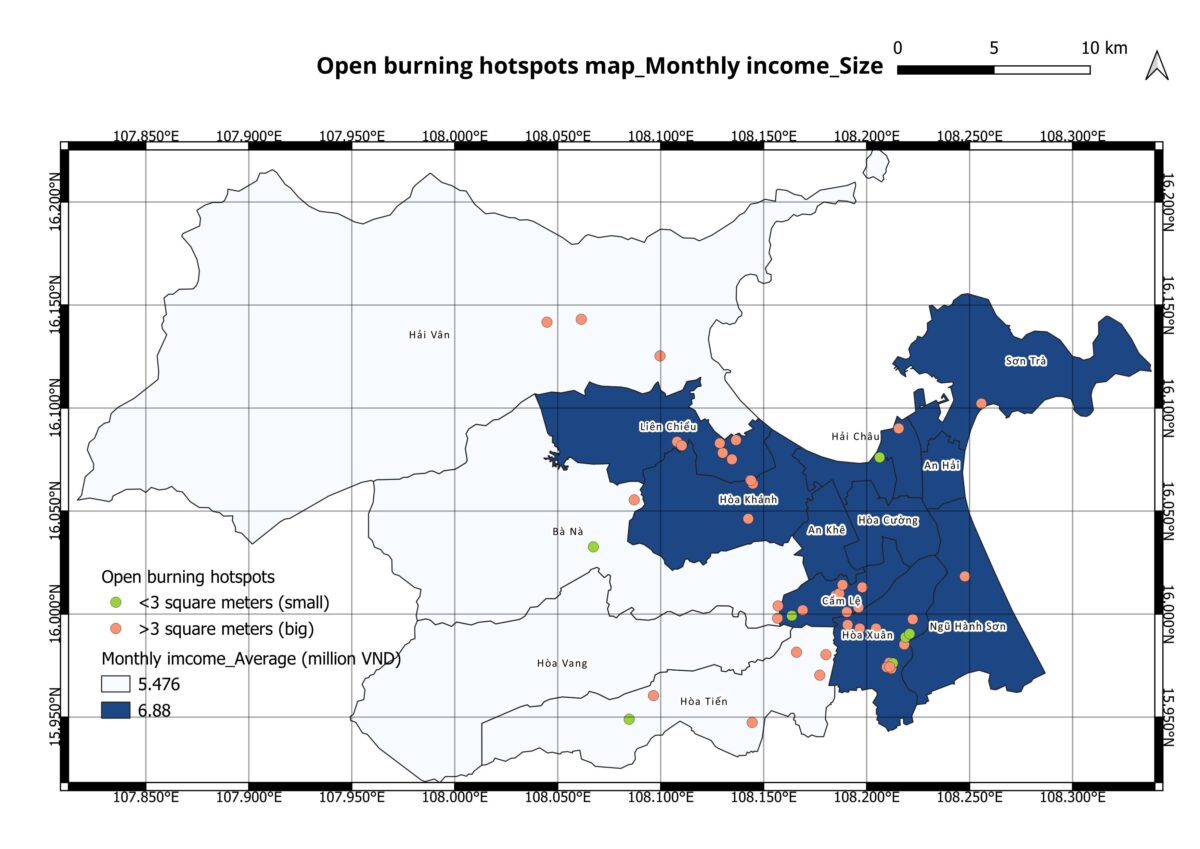
An open burning hotspots map by monthly icome
- Deliverable: Report of the assessment showing location of waste burning hotspots, pollution impacts on sectors of society in Da Nang, and recommendations for decision-makers. Download here.
Output 1.2: Assessment of Current Solid Waste Management Strategies, Gaps, and Needs in Da Nang (June 2025 – December 2025)
This phase assesses existing solid waste management practices across urban and agricultural sectors, with a specific focus on plastic waste. A key component of the assessment is the analysis of vulnerable groups—including women, youth, and ethnic minorities—to ensure their meaningful inclusion in future circular economy models.
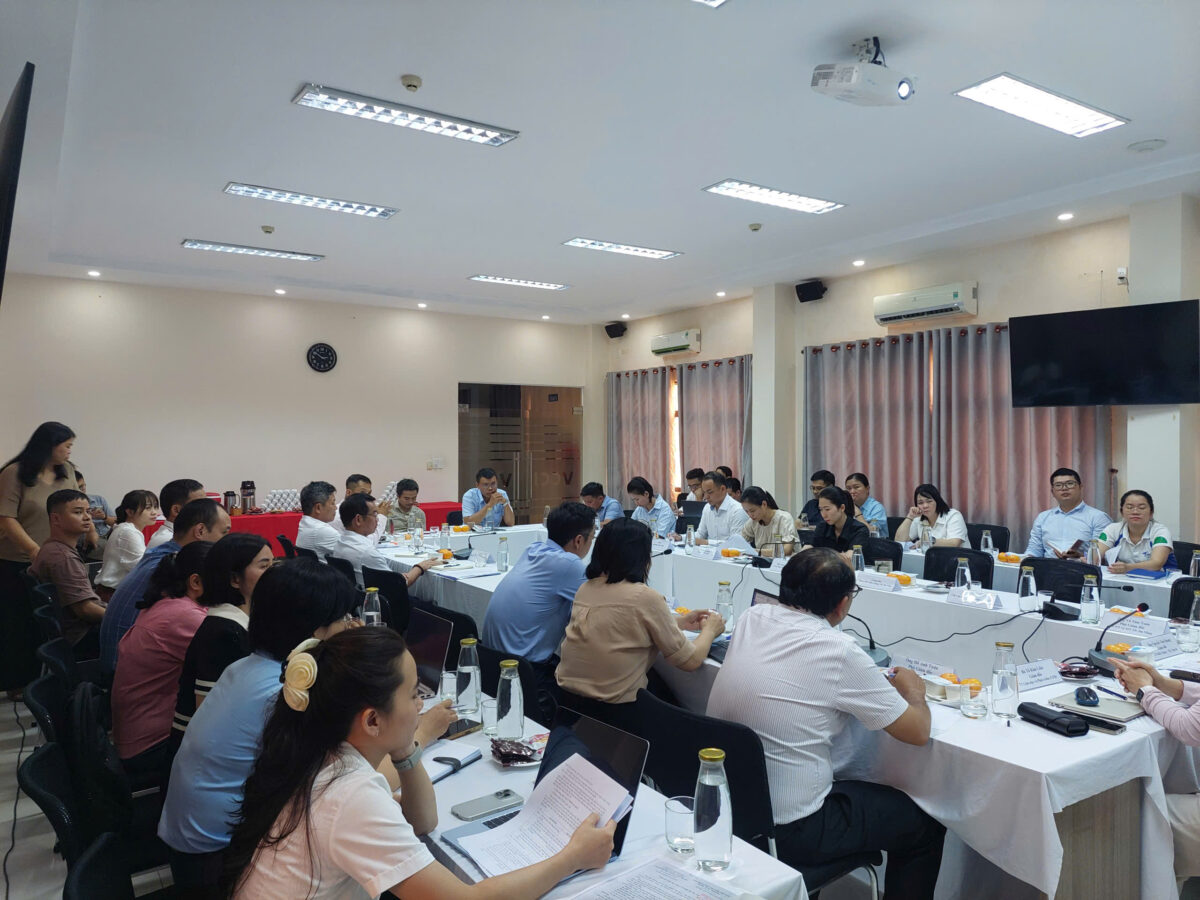
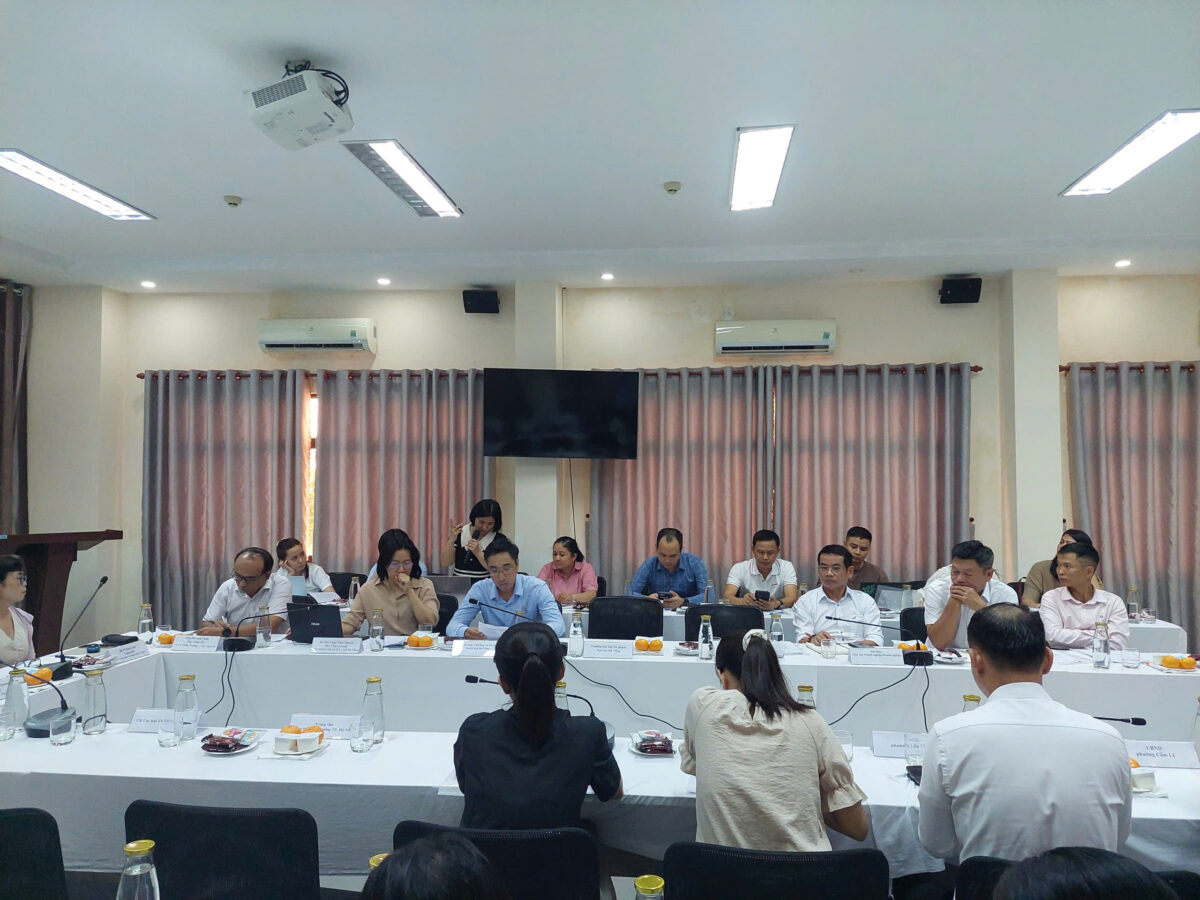
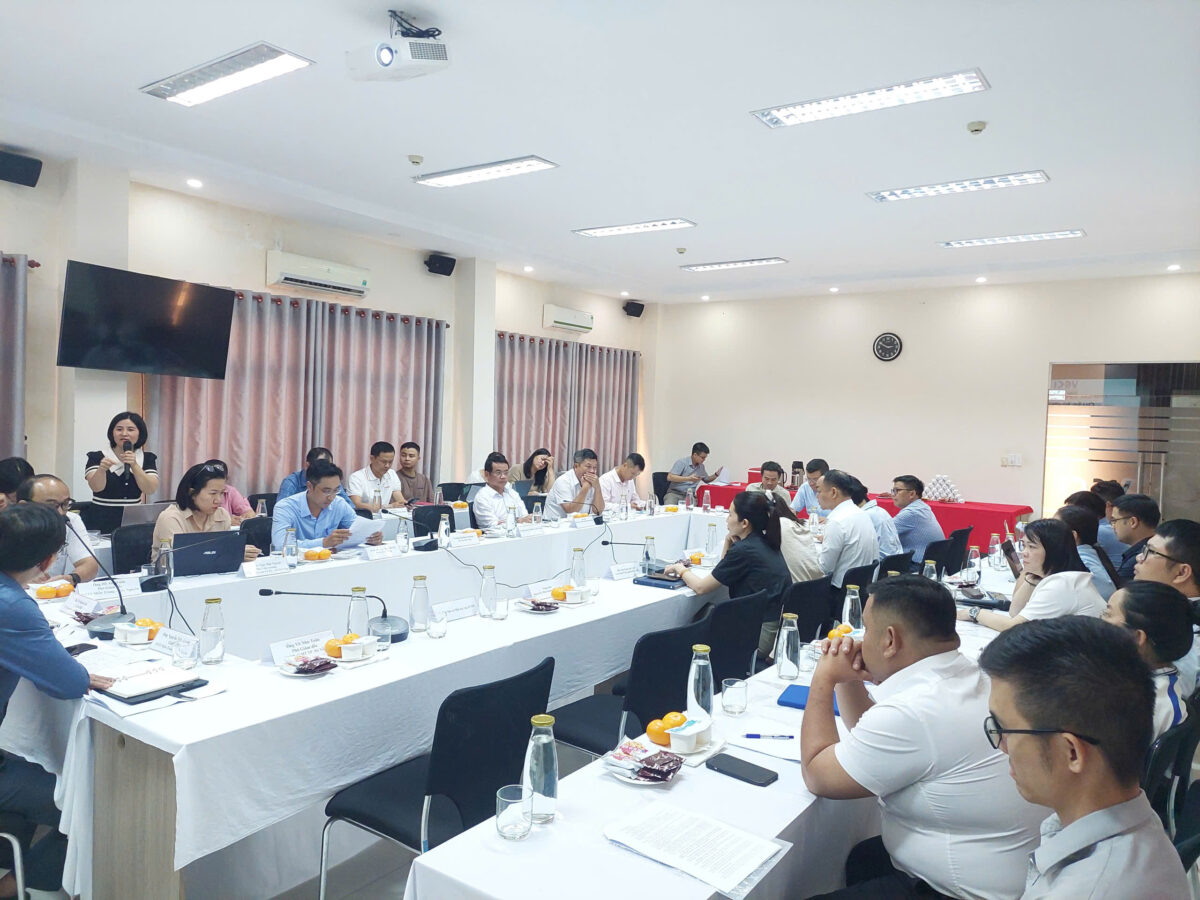
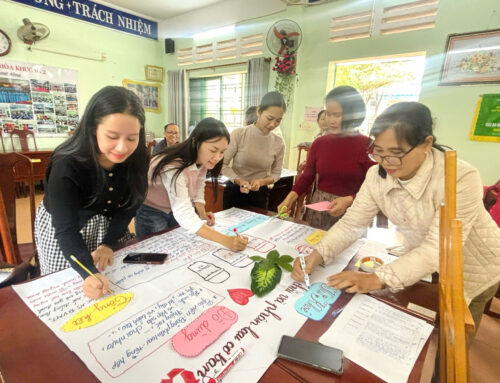
Consultation workshop with businesses on solid waste management in Da Nang
- Deliverable: Assessment report on current solid waste management strategies, gaps, and needs in Da Nang. Download here.
Output 1.3: Strategies to Enhance Multi Stakeholder Collaboration for Improved Solid Waste Management (September 2025 – October 2025)
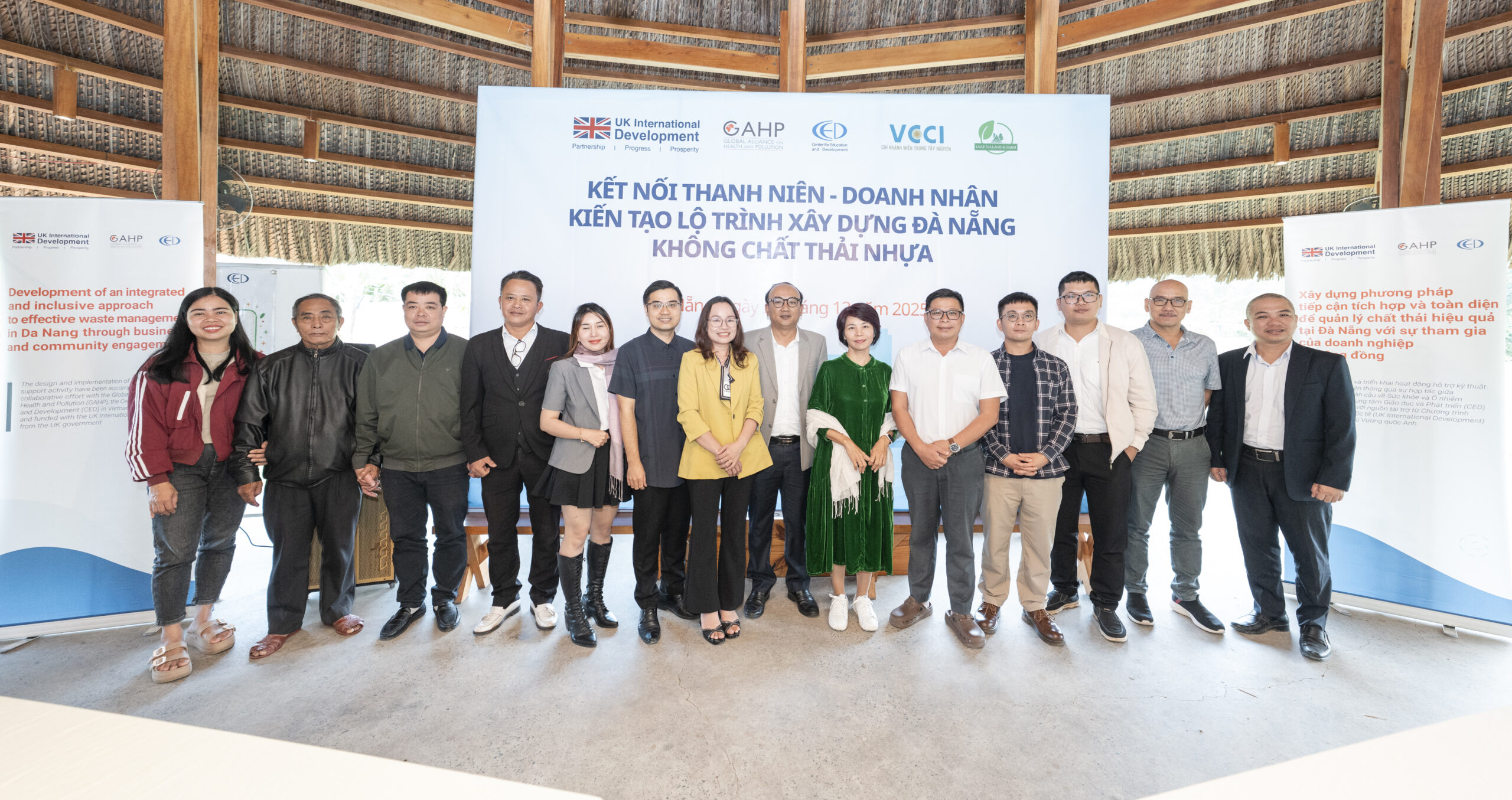
Building on research findings, the technical assistance initiative convenes multi stakeholder workshops to refine and co develop solutions for improved solid waste management. Working closely with local government authorities, the initiative supports policy dialogue and advocates for practical adjustments that reflect the needs and interests of diverse social groups, contributing to Da Nang’s environmental protection goals.
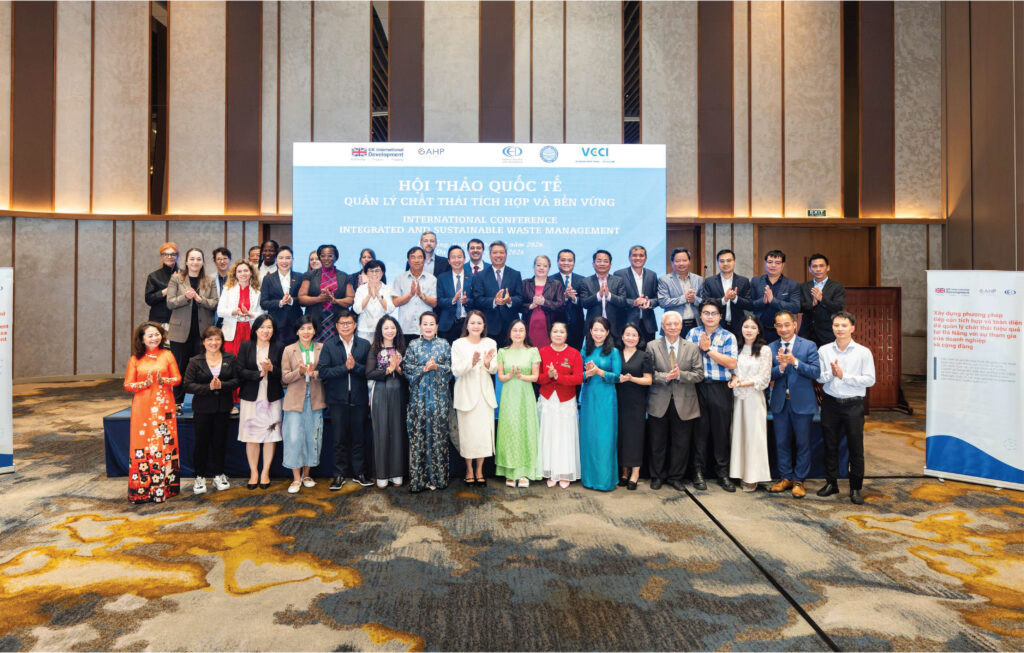
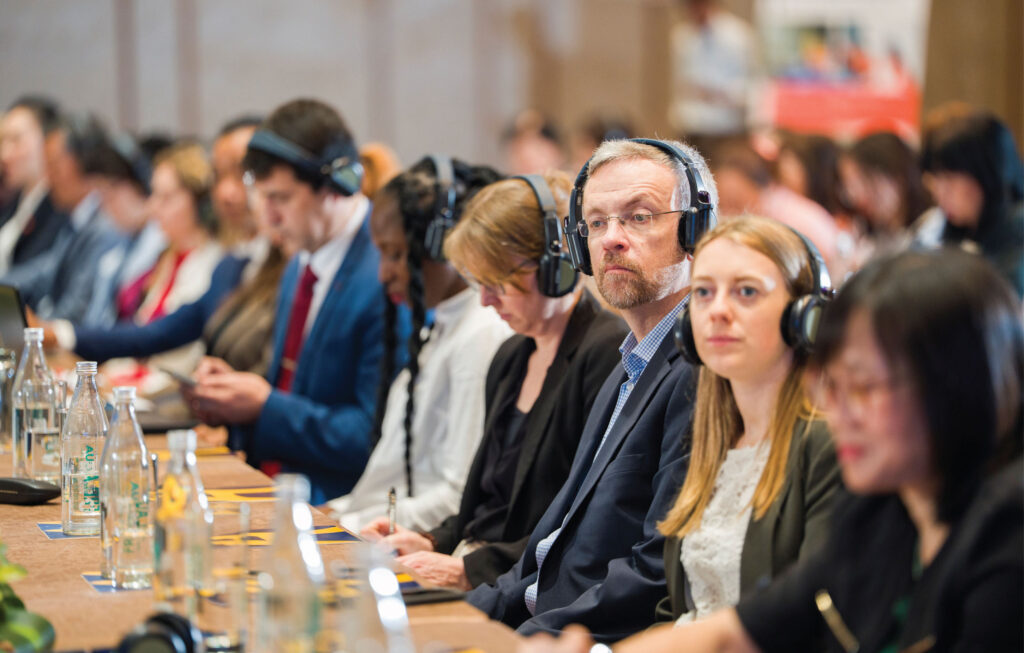
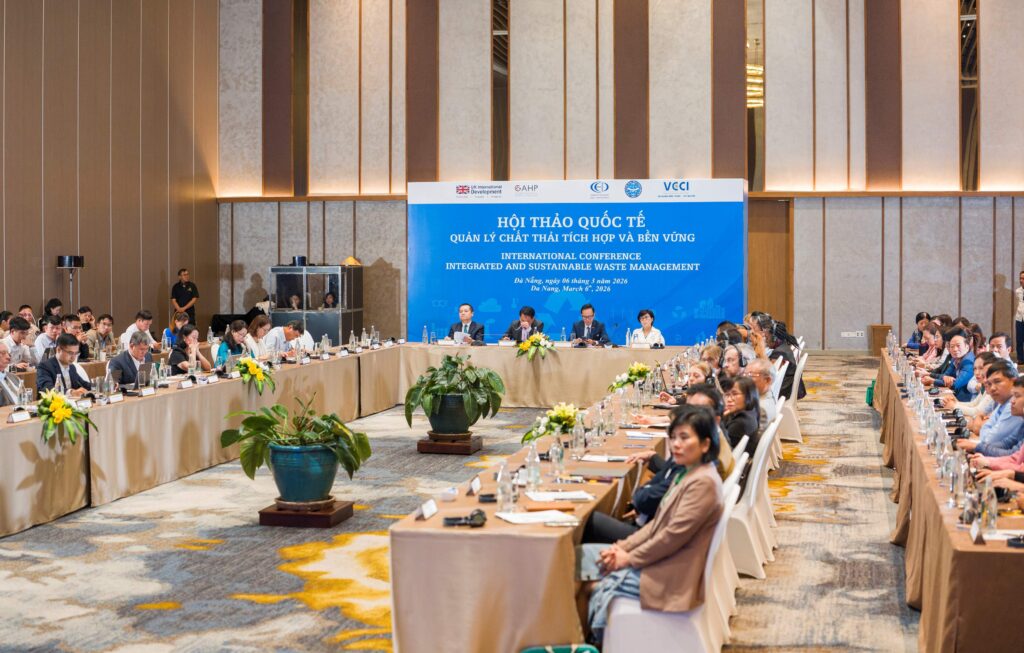
International Conference on Integrated and Sustainable Waste Management
- Deliverable: Report outlining strategies to strengthen stakeholder collaboration for improved solid waste management. Download here.
Outcome 2. Increased knowledge of sustainable waste management amongst businesses, particularly plastic waste and sustainable plastic alternatives, ensuring pollution reduction and human health benefits
The initiative is actively empowering local businesses, with a primary focus on Da Nang’s tourism and hospitality sectors, to transition from linear to circular waste models. Through this phase, we are implementing targeted plastic reduction strategies and promoting sustainable alternatives to protect local ecosystems while strengthening economic resilience and public health.
In collaboration with VCCI, we are engaging a diverse range of enterprises—including women-led businesses—to formalize their waste reduction commitments. This activity involves facilitating strategic dialogues and partnership agreements to ensure long-term sustainability and accountability.
Key Outputs & Timeline
Output 2.1. Study of plastic waste and sustainable plastic alternatives in selected businesses (June 2025 – October 2025)
This pilot is carrying out specialized research to map plastic consumption patterns within the hospitality and retail sectors. By synthesizing local data with international best practices, we are developing tailored roadmaps to help businesses adopt viable, sustainable plastic alternatives.
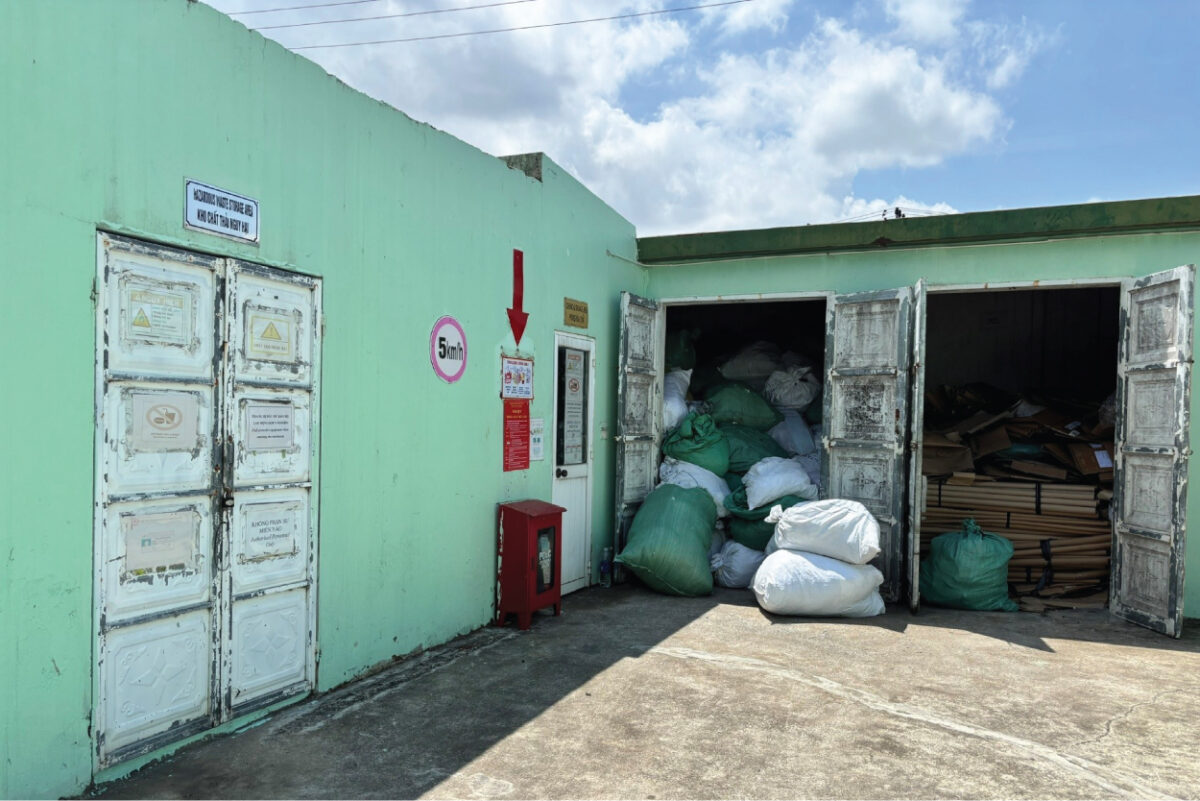
Source separation station
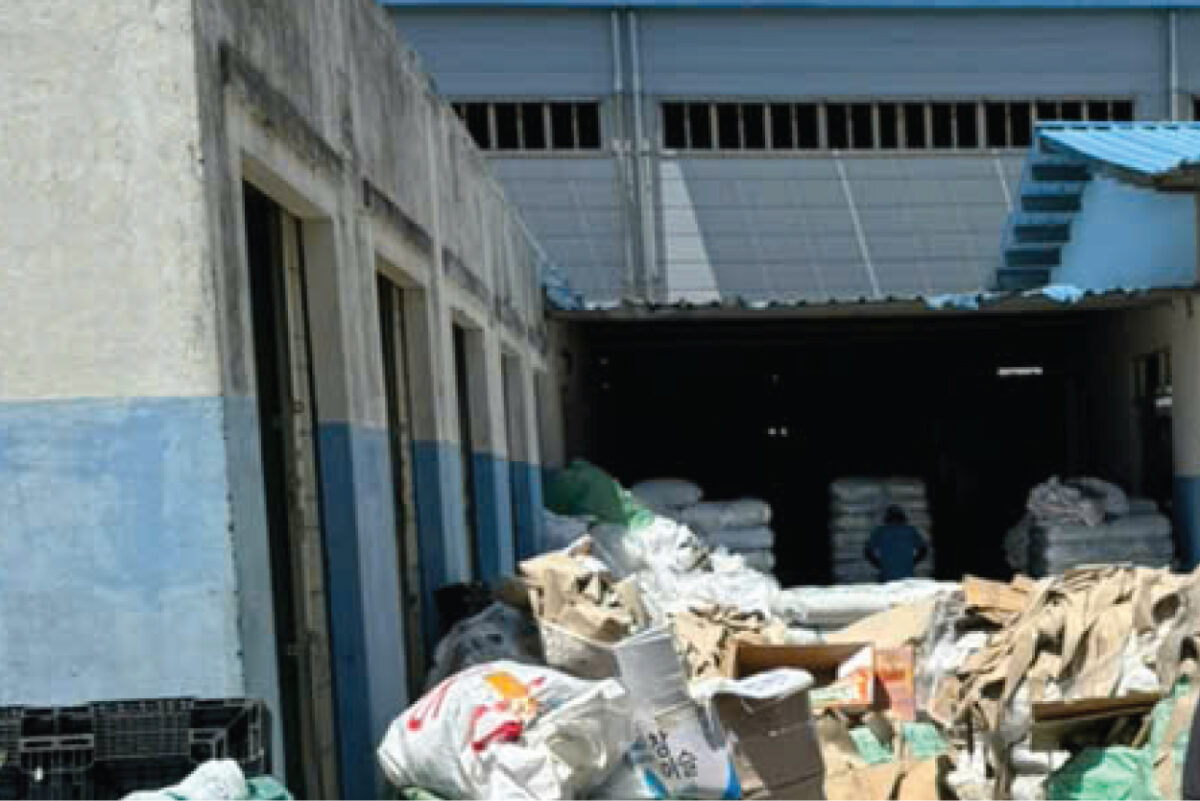
Waste storage area at a company
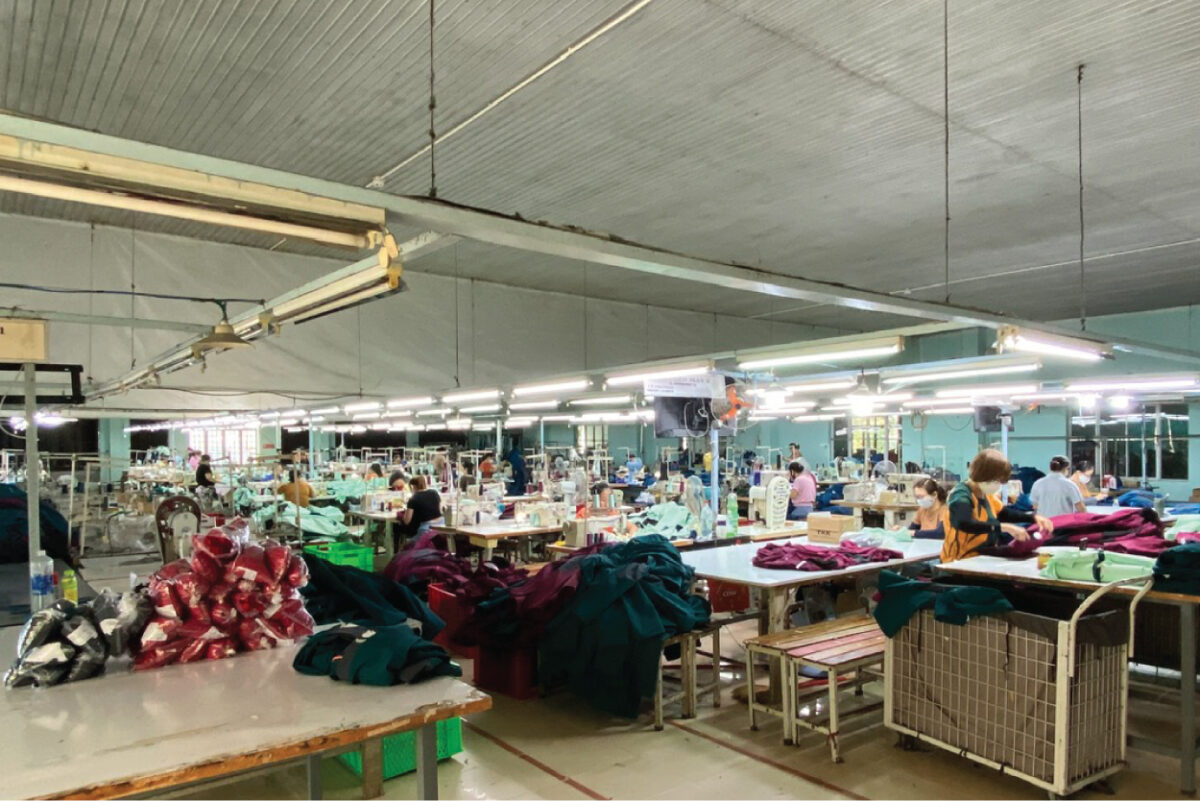
On-site at a business
- Deliverable: Report on recommendations for sustainable plastic alternatives in Da Nang. Download here.
Output 2.2. Agreements signed with businesses on plastic and other solid waste management (June 2025 – October 2025)
This initiative works to formalize partnerships with five local businesses, providing them with the necessary guidance to upgrade their waste practices. A central part of this activity is the co-creation of customized tools to monitor performance and ensure transparent outcomes.
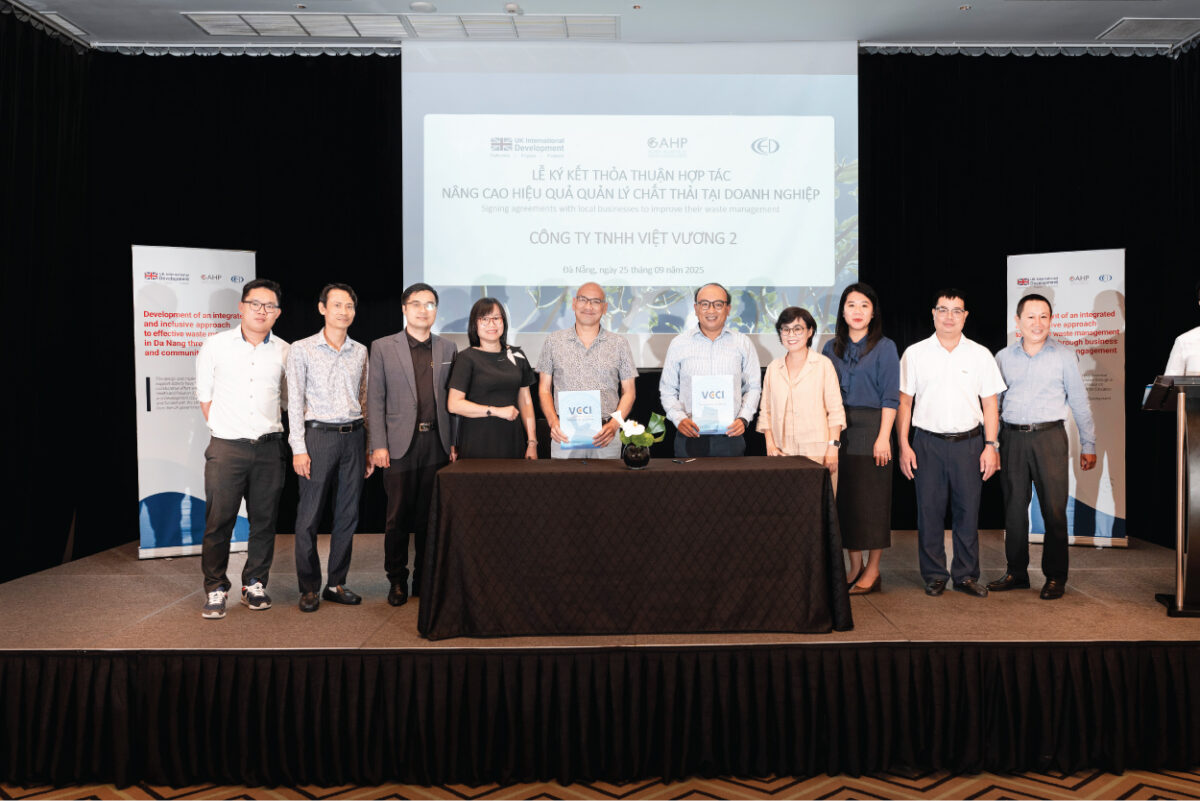
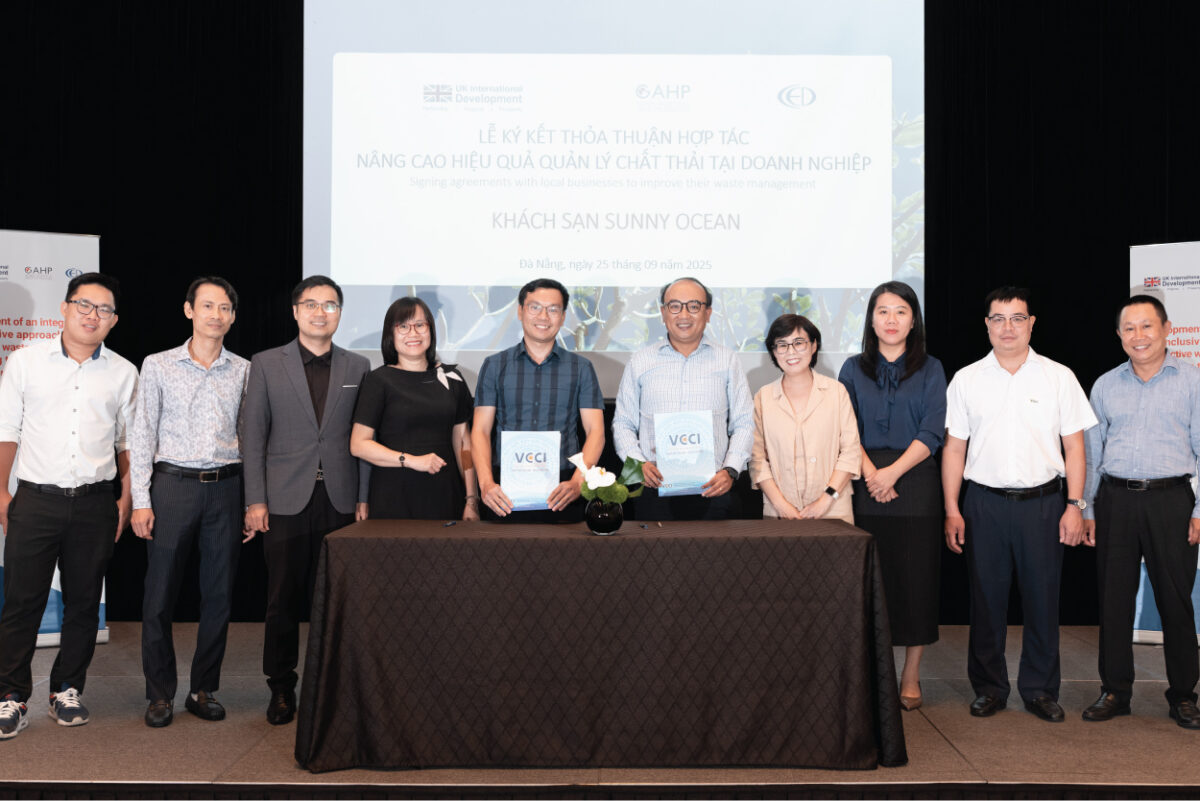
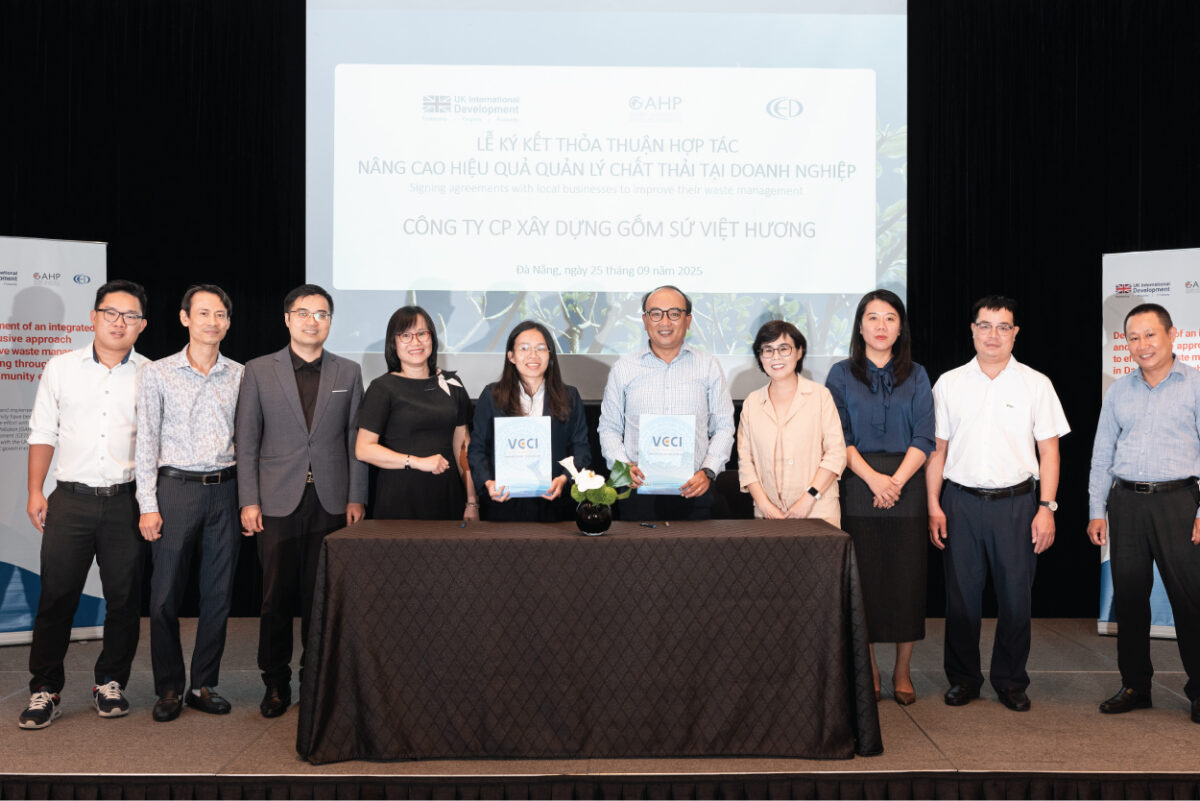
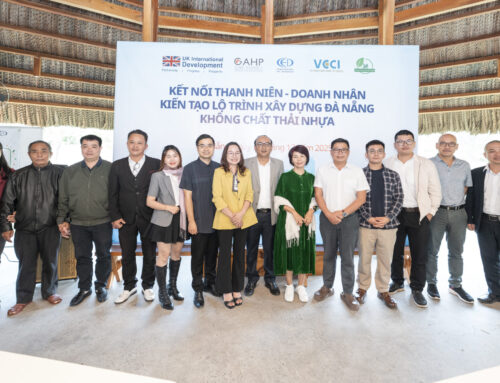
Signing Ceremony of the Memorandum of Understanding (MOU) on implementing circular economy models and waste auditing with businesses.
- Deliverable: Agreements with at least 5 local businesses.
Output 2.3. Waste audit systems developed and tested (August 2025 – March 2026)
The implementation team is responsible for developing and testing rigorous waste audit procedures… We establish baseline data, set reduction targets, and create specific action plans to optimize how waste is sorted and disposed of.
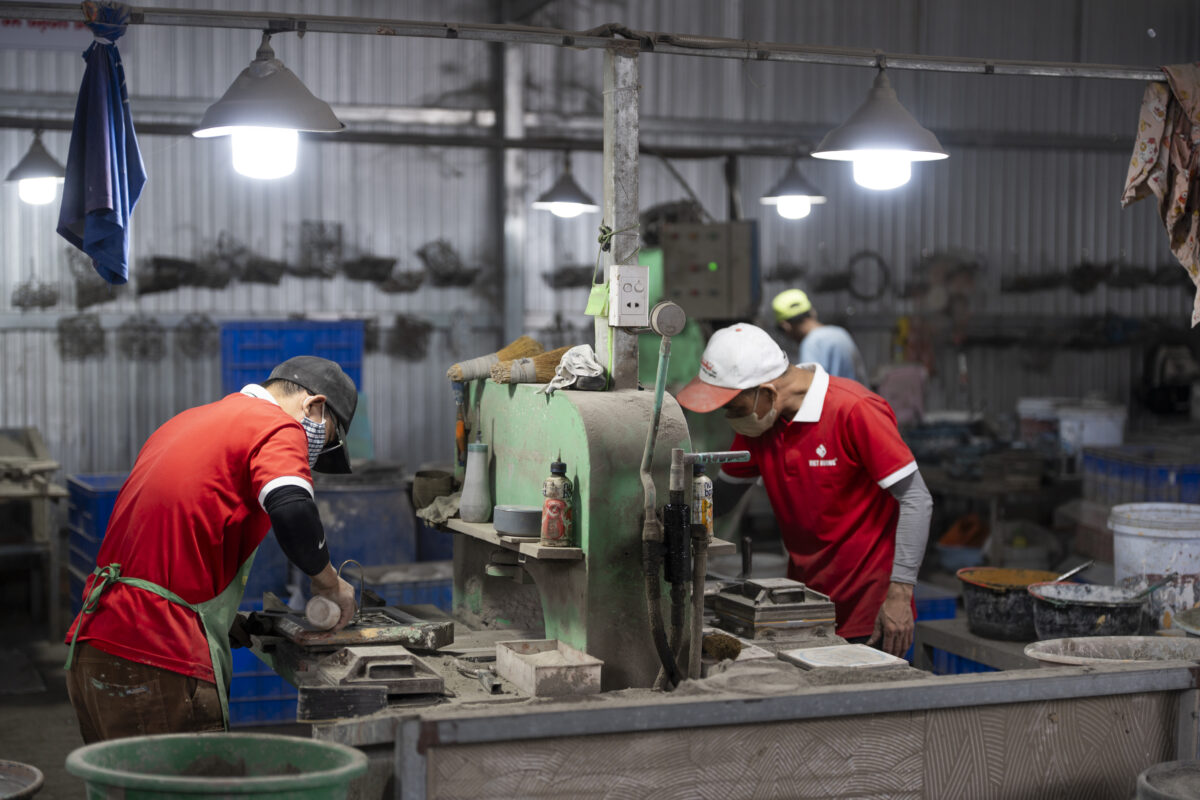
Tile production at a company
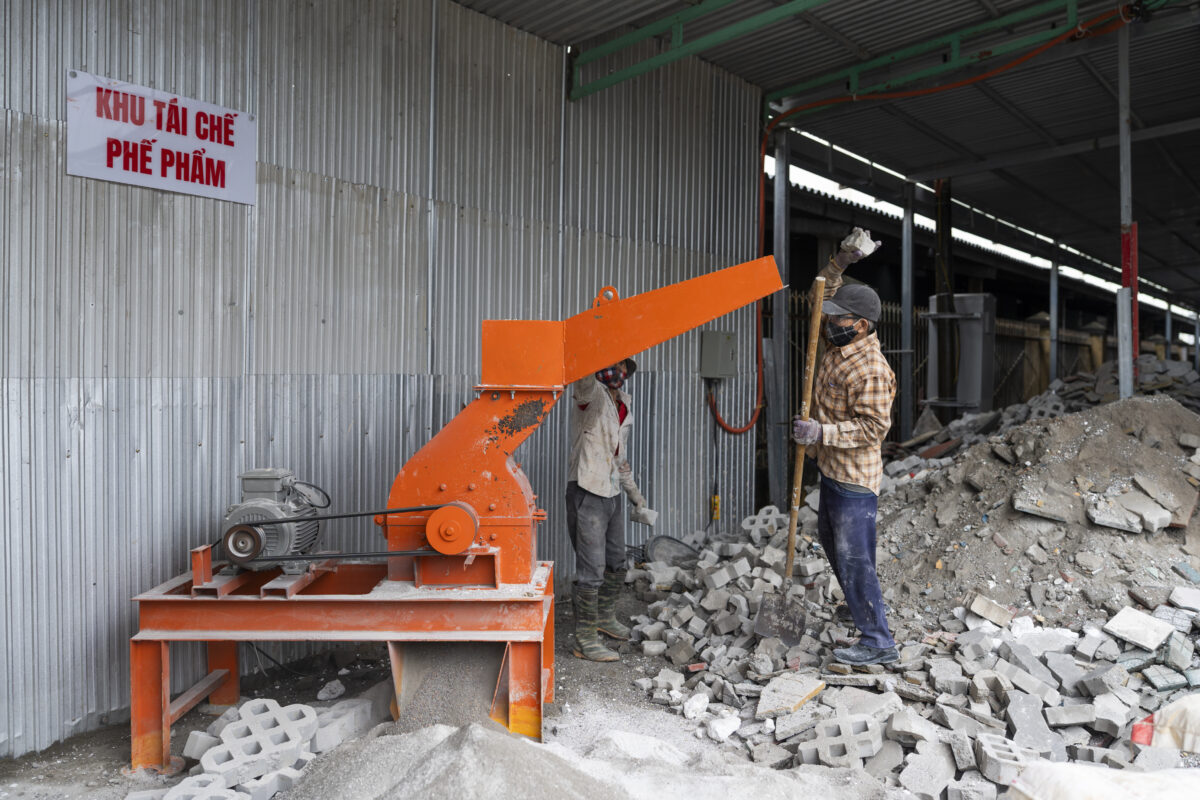
A recycling machine at a business
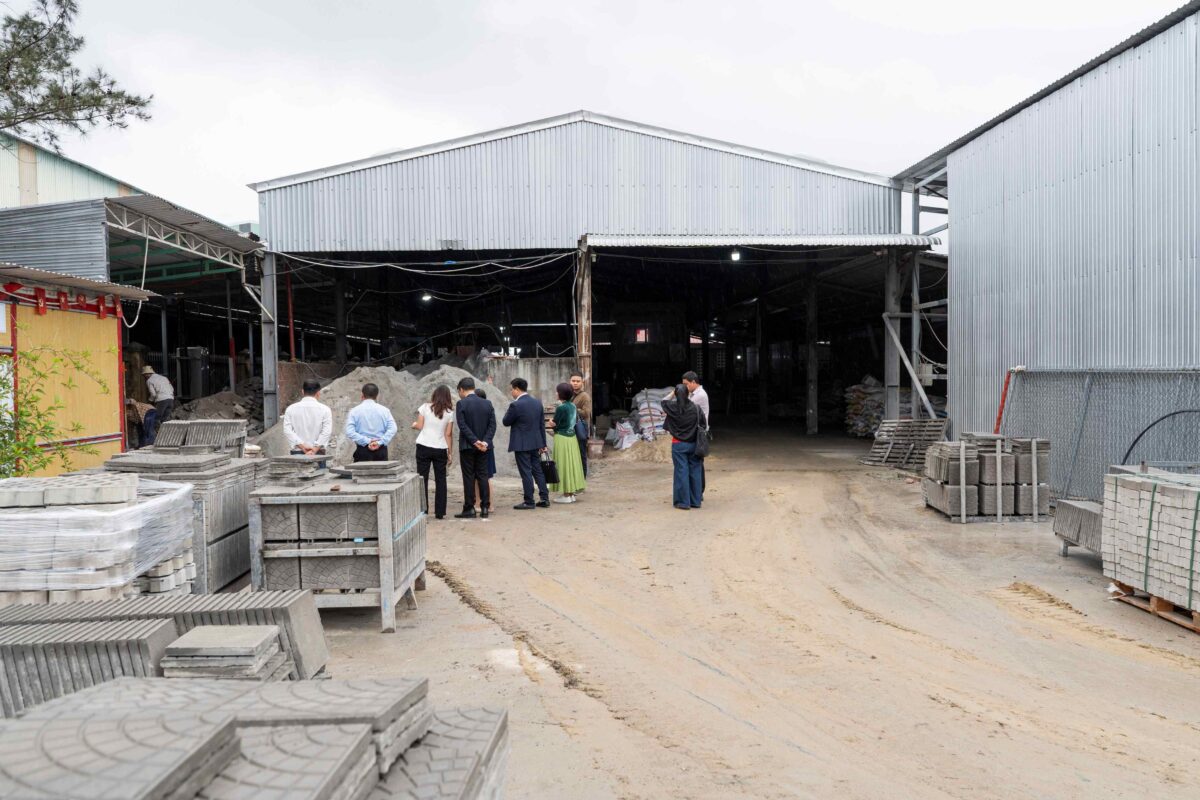
On-site consultation at a business
- Deliverable: Waste audit report detailing impact of the action plan intervention. Download here.
Output 2.4. Pilot circular models developed and tested (Ongoing through March 2026)
This initiative facilitates businesses in transitioning to circular models through strategies like resource recovery and circular supply chains. By tracking metrics such as cost savings and resource efficiency, we demonstrate the economic and environmental value of the circular economy.
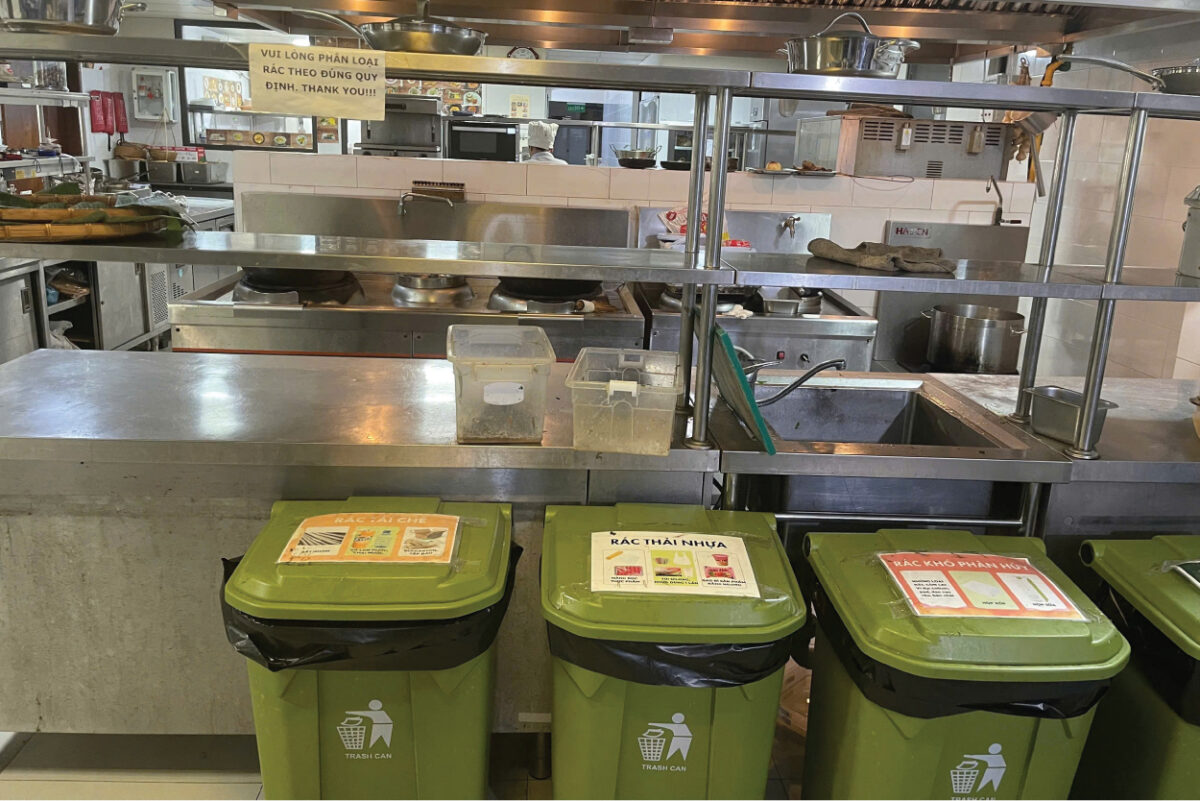
Waste bins with color-coded stickers in the kitchen of Silk Sense resort
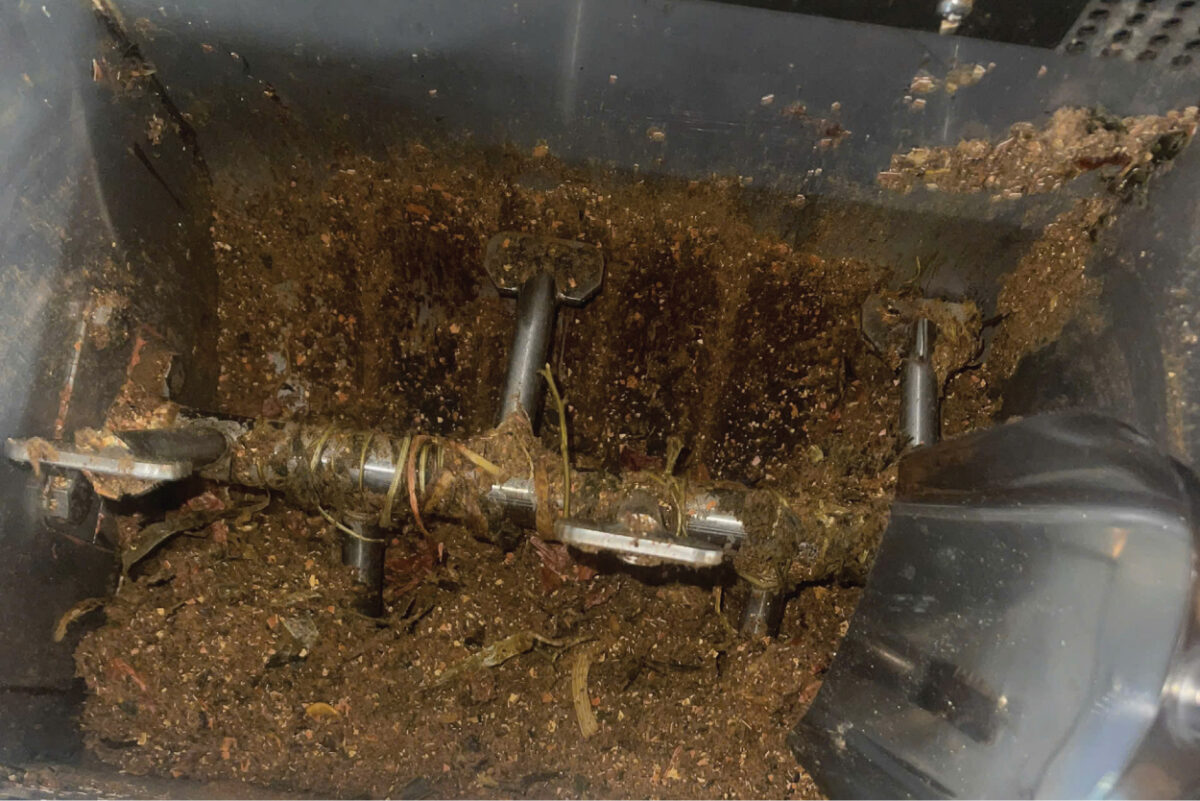
A composting machine
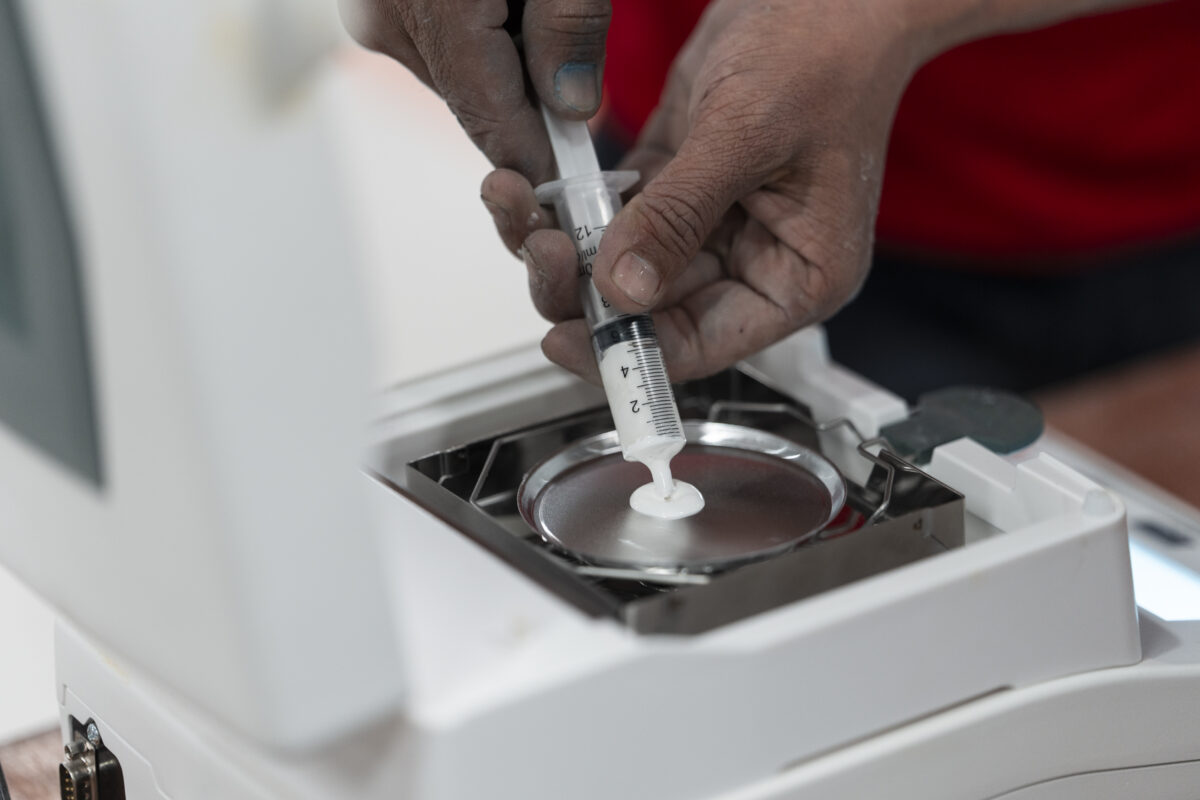
Workers use precision moisture meters to mix materials.
- Deliverable: Pilot circular models report which details the pilot models development and testing and provides recommendations for stakeholders. The report will include the performance of the models against the defined indicators (for example resource efficiency, waste reduction, costs saving and revenues from recycled materials) and livelihood benefits. Download here.
Outcome 3. Increased awareness of business, government and young people of waste management and sustainable alternatives to plastic
Sustainability is a lifelong commitment. Outcome 3 focuses on shifting mindsets across Da Nang by engaging youth leaders, schools, and businesses. Through creative advocacy and educational programs, we aim to make sustainable waste management a core community value.
The initiative is committed to Gender Equality, Disability, and Social Inclusion (GEDSI). A primary focus is supporting informal waste pickers—90% of whom are middle-aged women with low income levels. By integrating them into the formal circular economy, we aim to improve their livelihoods and well-being. We also ensure that youth, ethnic minorities, and other marginalized groups have a seat at the table in decision-making processes.
Key Outputs & Timeline
Output 3.1. Increased awareness of businesses, government, and students about waste management and sustainable alternatives to plastic (June 2025 – March 2026)
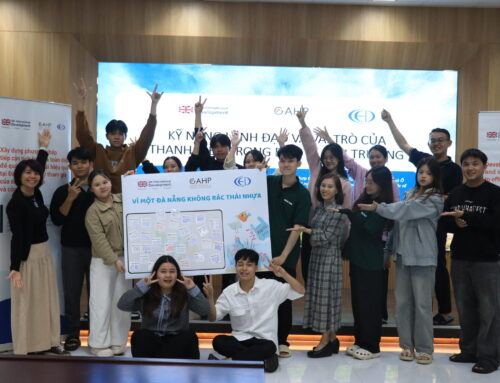
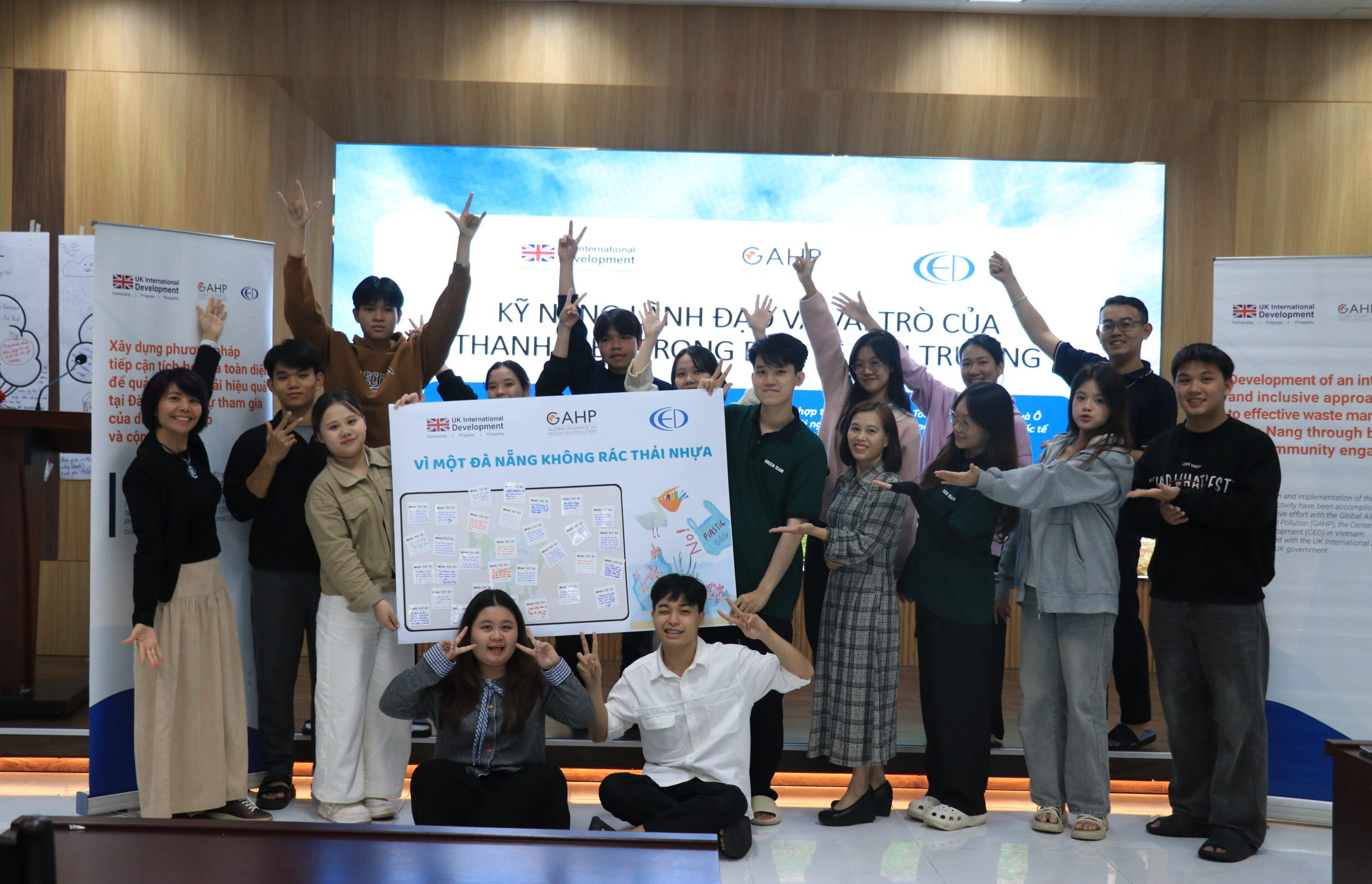
By empowering 25 youth leaders with circular economy expertise, this initiative delivered 3-4 high-impact interventions. From localized waste management to digital advocacy, these ambassadors successfully drove peer-to-peer behavioral change across their communities.
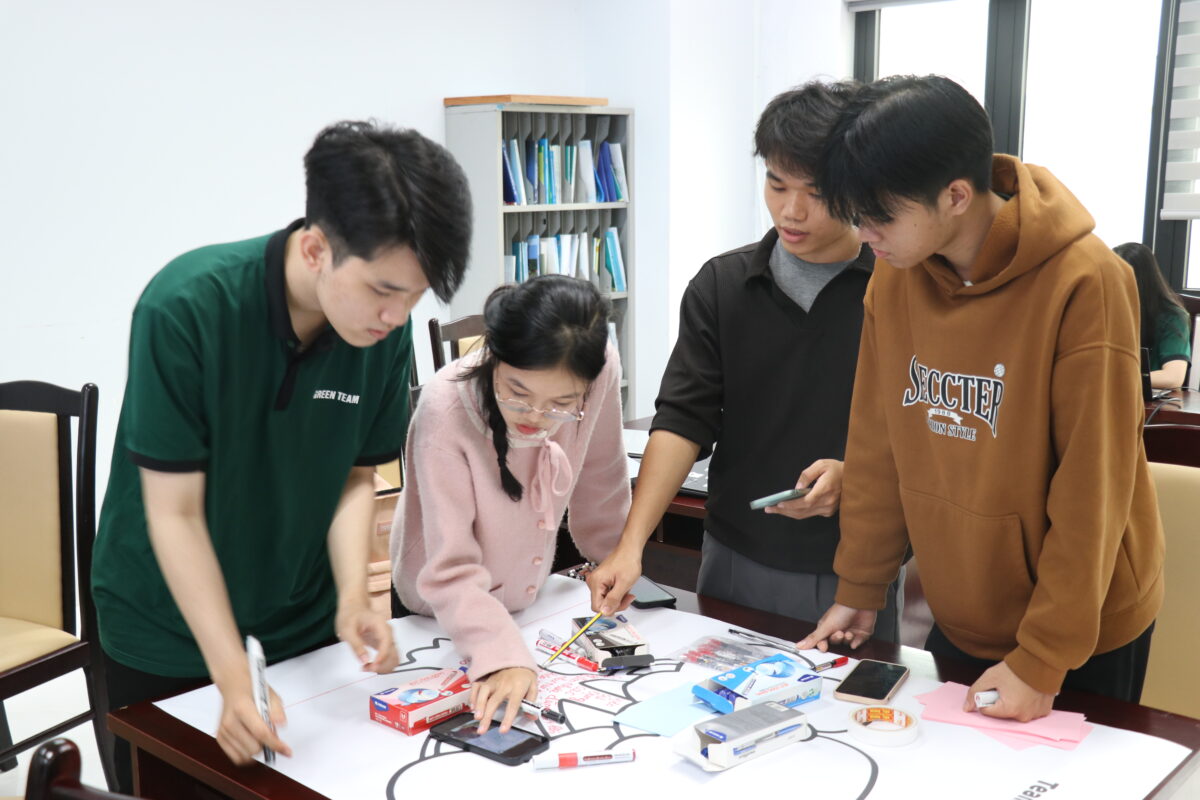
Applying problem tree analysis to tackle challenges
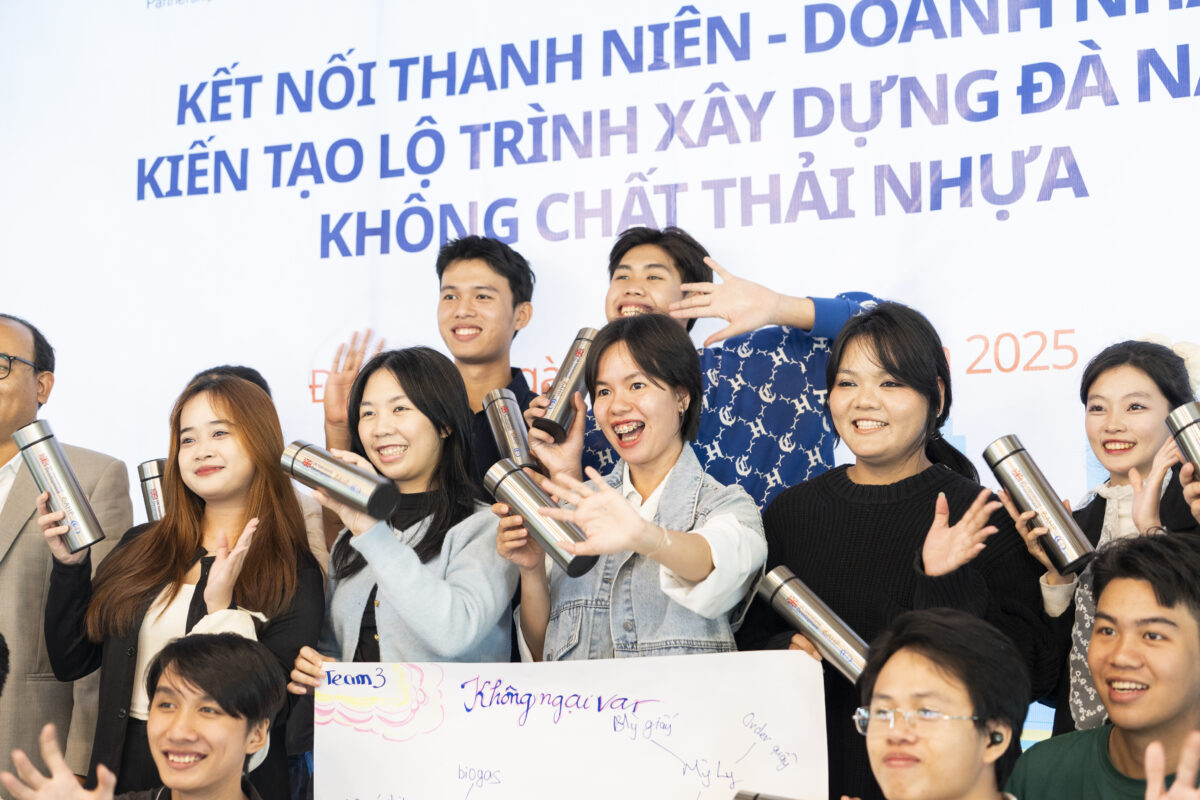
Students engaging with businesses
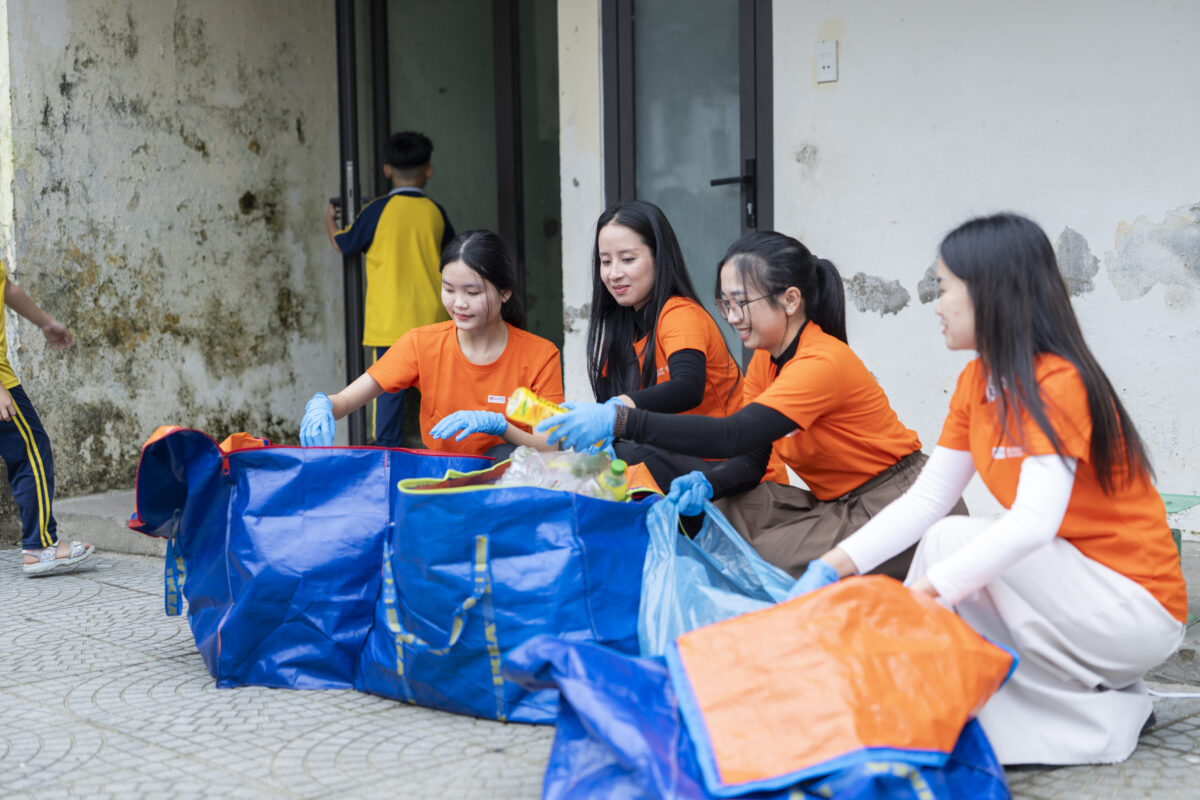
A young leader leading waste collection efforts at local schools.
- Deliverable: Awareness activities report detailing the number of youth leaders recruited, training provided, details and impact of the initiatives developed and any lessons learnt from the activities. Download here.
Output 3.2. Recommendations for the public education program (June 2025 – March 2026)
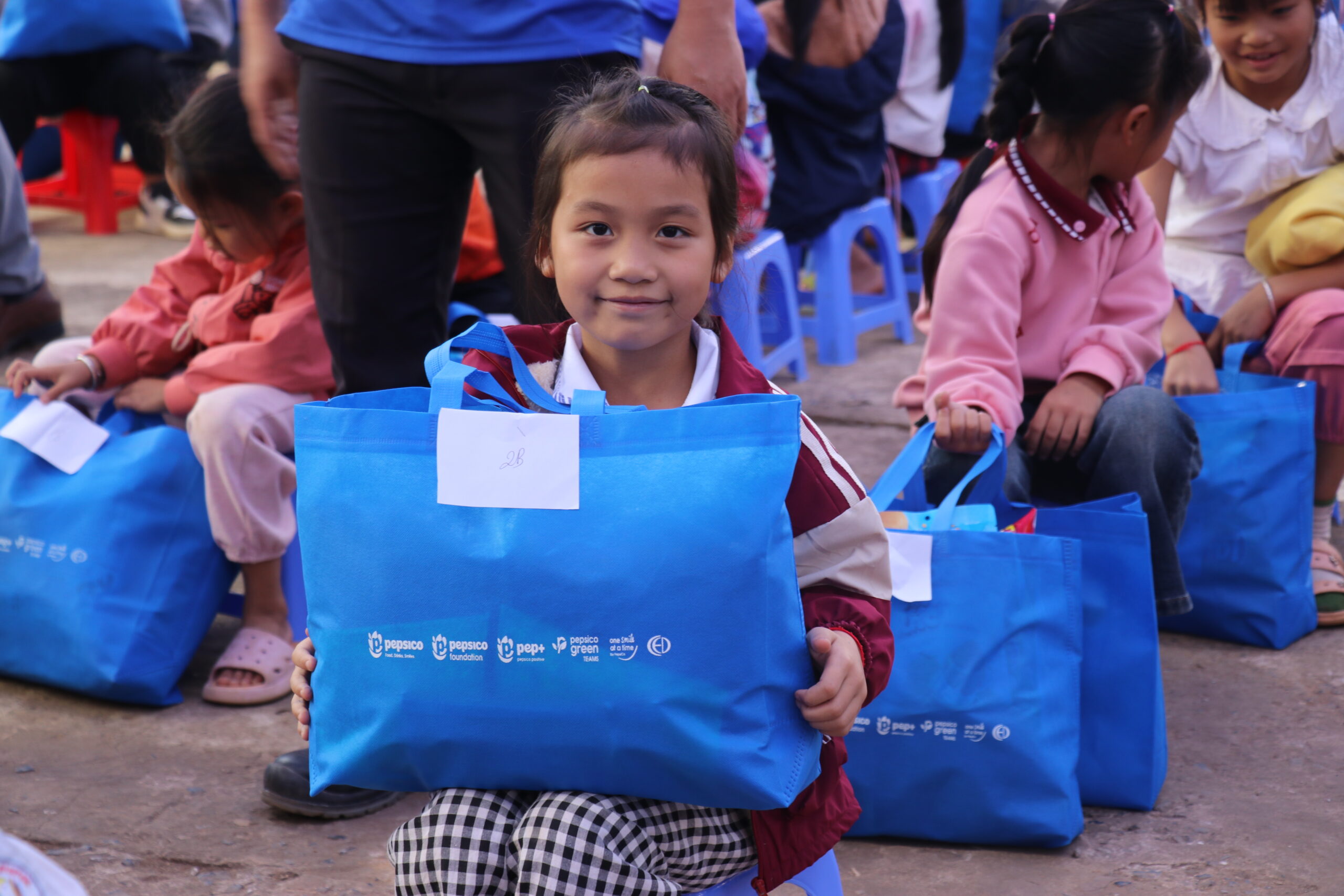
In partnership with the Da Nang Department of Education and Training (DOET), we are launching education campaigns in at least 5 local schools.
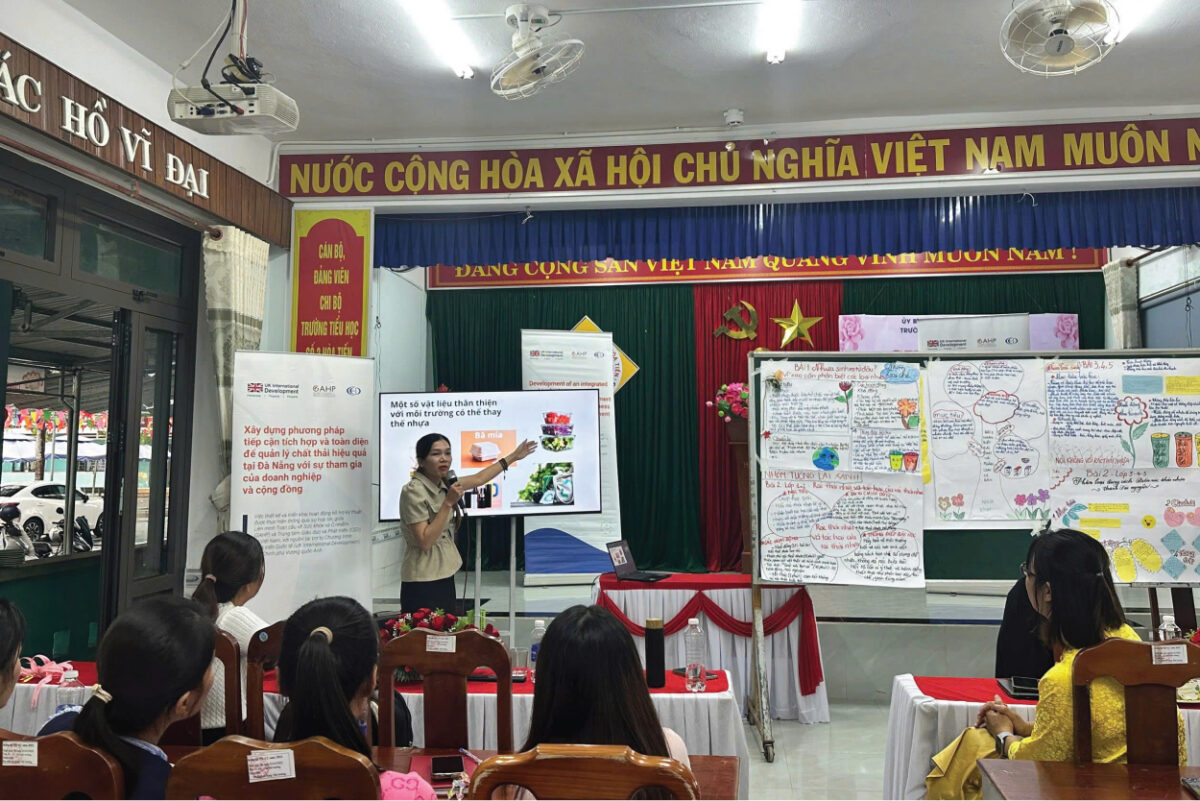
Teachers from five schools participate in the TOT courses
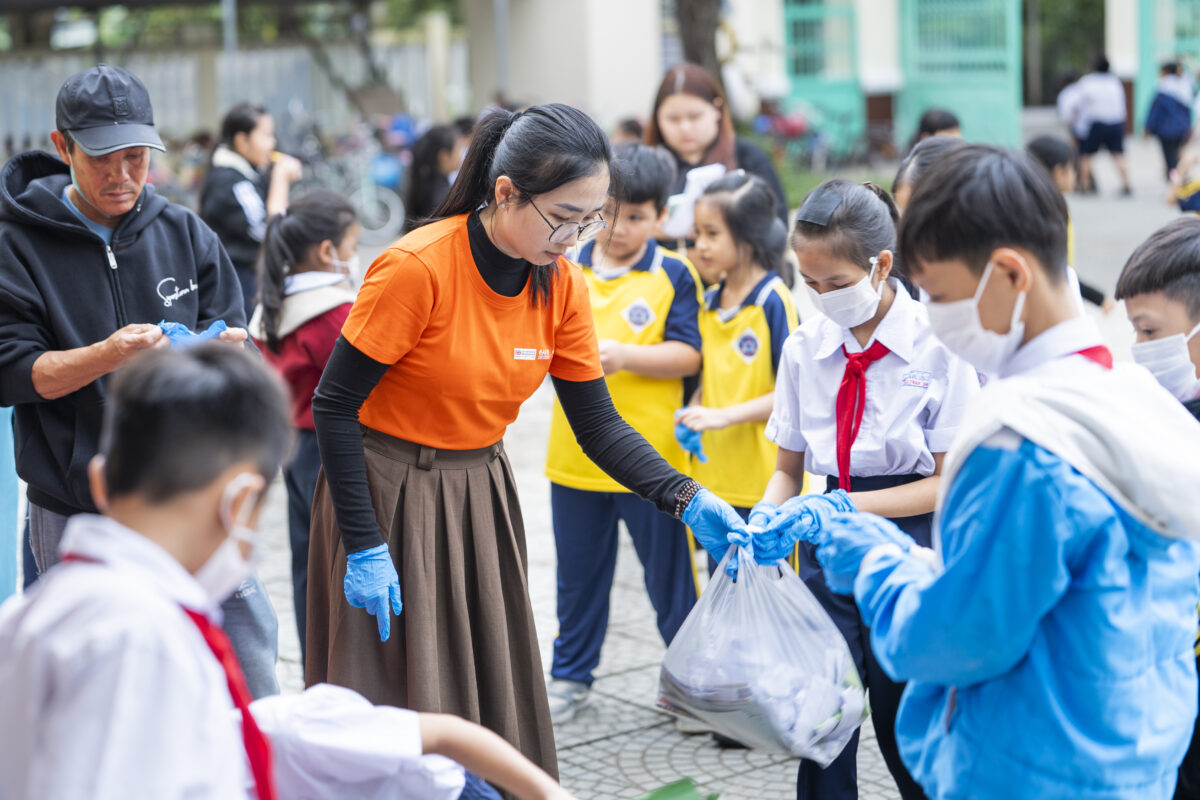
Students engaging in a waste collection day at school
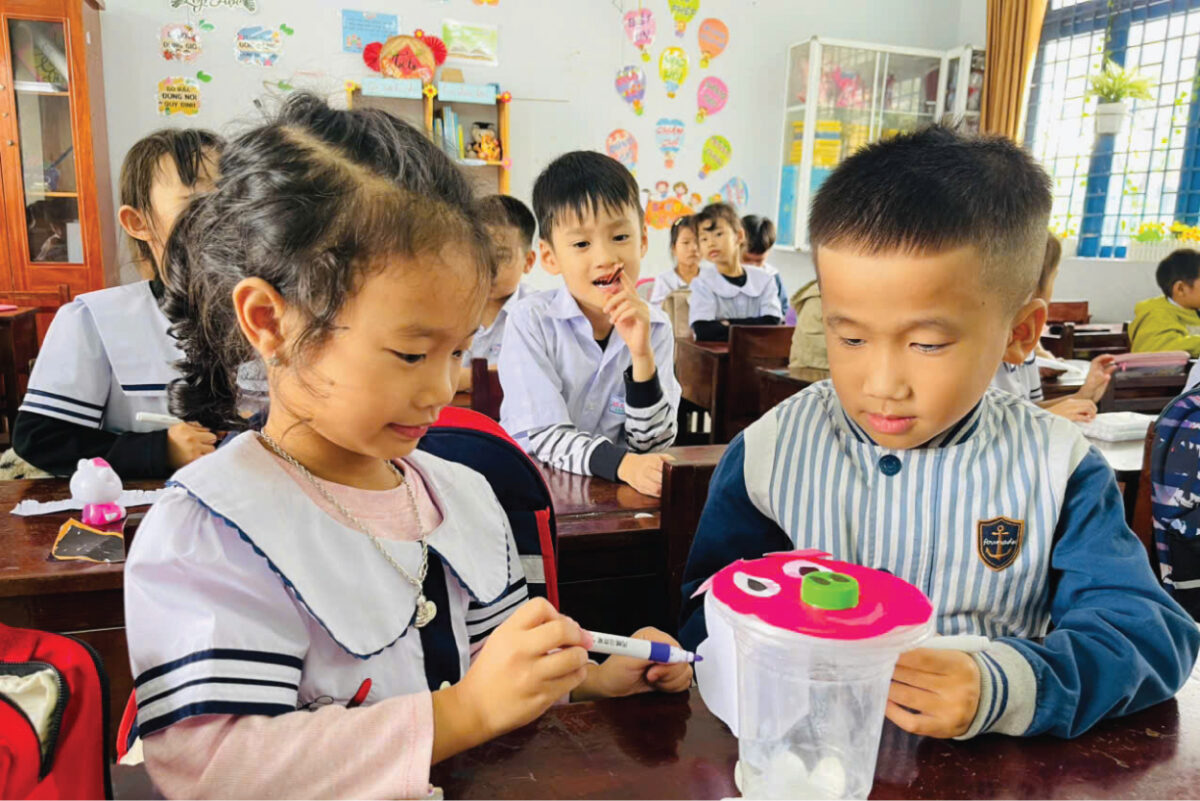
Students learn how to recycle plastic items
- Action: Developing a 4-hour curriculum for students aged 7-14 on waste separation and reducing single-use plastics.
- Innovation: Testing plastic waste collection models in schools to measure real-world impact over a 6-month period.
- Deliverable: Report containing recommendations to Da Nang Department of Education and Training (DOET) as well as Department of Environment and natural Resources (DONRE) on the public education program on reducing single use plastics and separating waste at source. The report will include the results of awareness level surveys of students before and after the program. The success of the program will be measured and reported by the number of people that participated and the volumes of low value plastic wastes collected, transported, and recycled. Download here.
The design and implementation of these technical support activities have been accomplished through a collaborative effort with the Global Alliance on Health and Pollution (GAHP), the Center for Education and Development (CED), and funded by UK International Development from the UK government through the Department for Environment, Food and Rural Affairs (Defra). For further information about GAHP, please visit: www.gahp.org