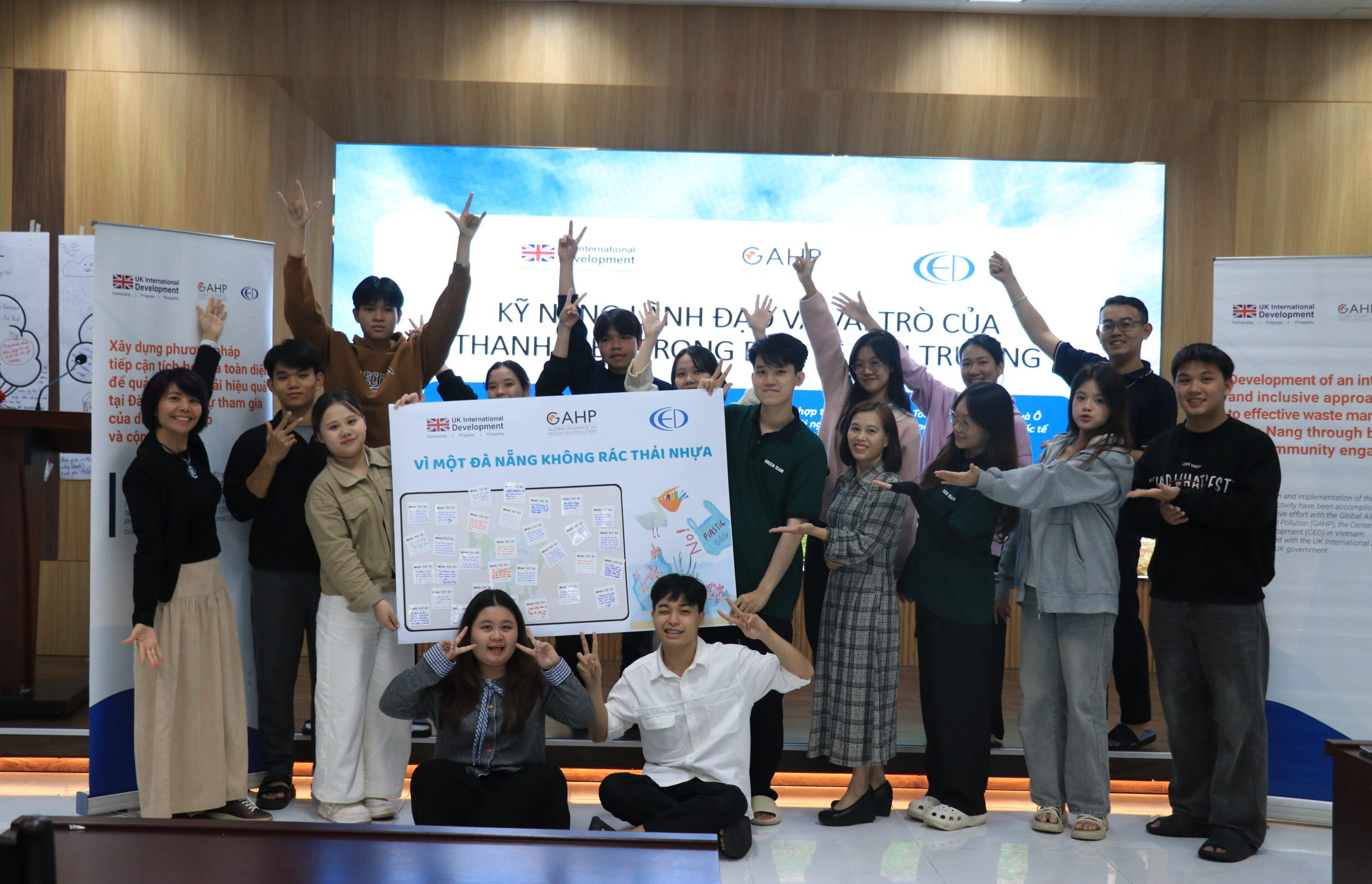
Within the framework of the project activities, from October to November 2025, Center for Education and Development (CED) organized a series of teacher training workshops on experiential learning and STEAM education under the theme “Life Cycle of Plastics” at primary and lower secondary schools across Da Nang city.
The training activities aimed to strengthen teachers’ capacity to apply active teaching methods, experiential learning, and integrated STEAM-based approaches, in line with the requirements of the 2018 General Education Curriculum. At the same time, the program supported teachers in using and developing school-level implementation plans for the resource package “Integrating Experiential Education and STEAM into Subjects” developed by CED.
The training series was implemented at five schools, with the participation of 159 teachers and school staff. The workshops were facilitated by CED experts, providing valuable professional insights and practical guidance.
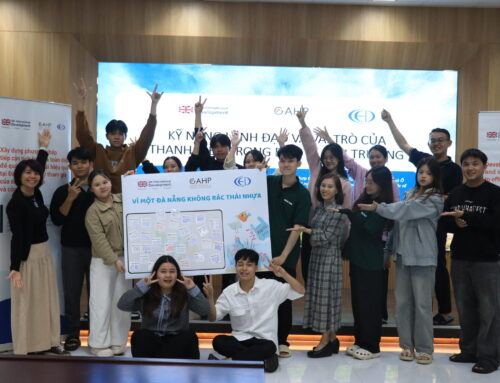
The training content focused on hands-on experience and practice with active teaching and learning methods, including the Know – Want – Learnt (KWL) table, accelerated learning, expert group work (Jigsaw), problem tree analysis, brainstorming, card matching, and creative lesson design. Teachers worked in groups to develop STEAM-integrated lesson ideas incorporating environmental education content, presented their ideas through posters, and conducted short practice lessons for all participants.
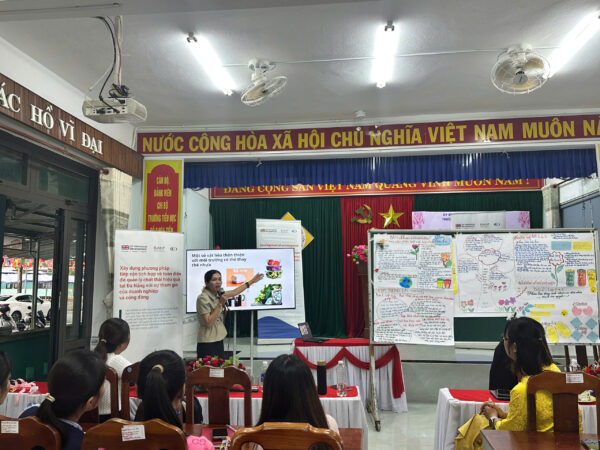
Teachers present ideas for STEAM‑integrated lesson plans
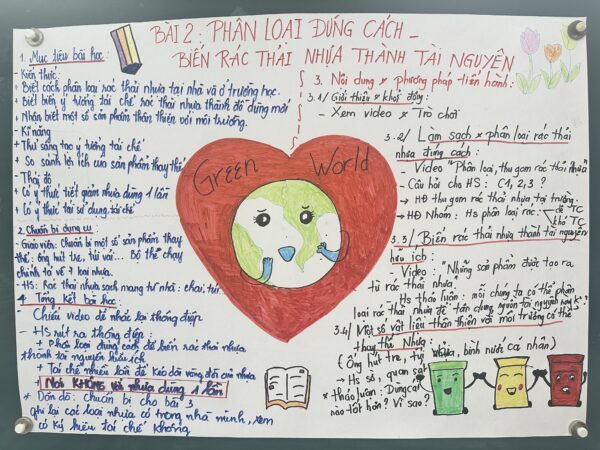
Developing lesson ideas integrating STEAM and the Life Cycle of Plastics
The training activities contributed to promoting the integration of environmental protection education, STEAM education, and experiential learning into classroom practice, thereby enhancing teachers’ capacity and laying a foundation for schools to effectively implement sustainable education initiatives in the coming period.
The design and implementation of these technical support activities have been accomplished through a collaborative effort with the Global Alliance on Health and Pollution (GAHP), the Center for Education and Development (CED), and funded by UK International Development from the UK government through the Department for Environment, Food and Rural Affairs (Defra)